The cat’s out of the bag—sustainable cat food is here to support planet-friendly purring. In addition to providing ethical, humane, and nutrient-rich meals for our feline friends, it also helps clean up the act of the cat and dog food industry.
The global pet food industry has a carbon footprint (er, paw print) of 106 million tonnes of carbon dioxide. If it were a country, it would be the 60th highest emitter.
But it doesn’t have to be this way. There are companies filling pet food bowls around the globe with eco-friendly cat foods that are better for the planet, and we’ll be clawing our way through more now that we’re rolling out our new Brand Rating System.
In addition to looking at ingredients and sourcing issues, this system takes into account 22 criteria, ranging from farmer welfare to climate action by the brand, and much more you can learn about here.
We independently research all featured brands and we ask them to confirm their claims. In many cases we personally review recommended products. This post contains affiliate links which means we may earn a commission if you buy something. Learn more here.
Eco-Friendly Cat Food Brands We Paw-sitively Love
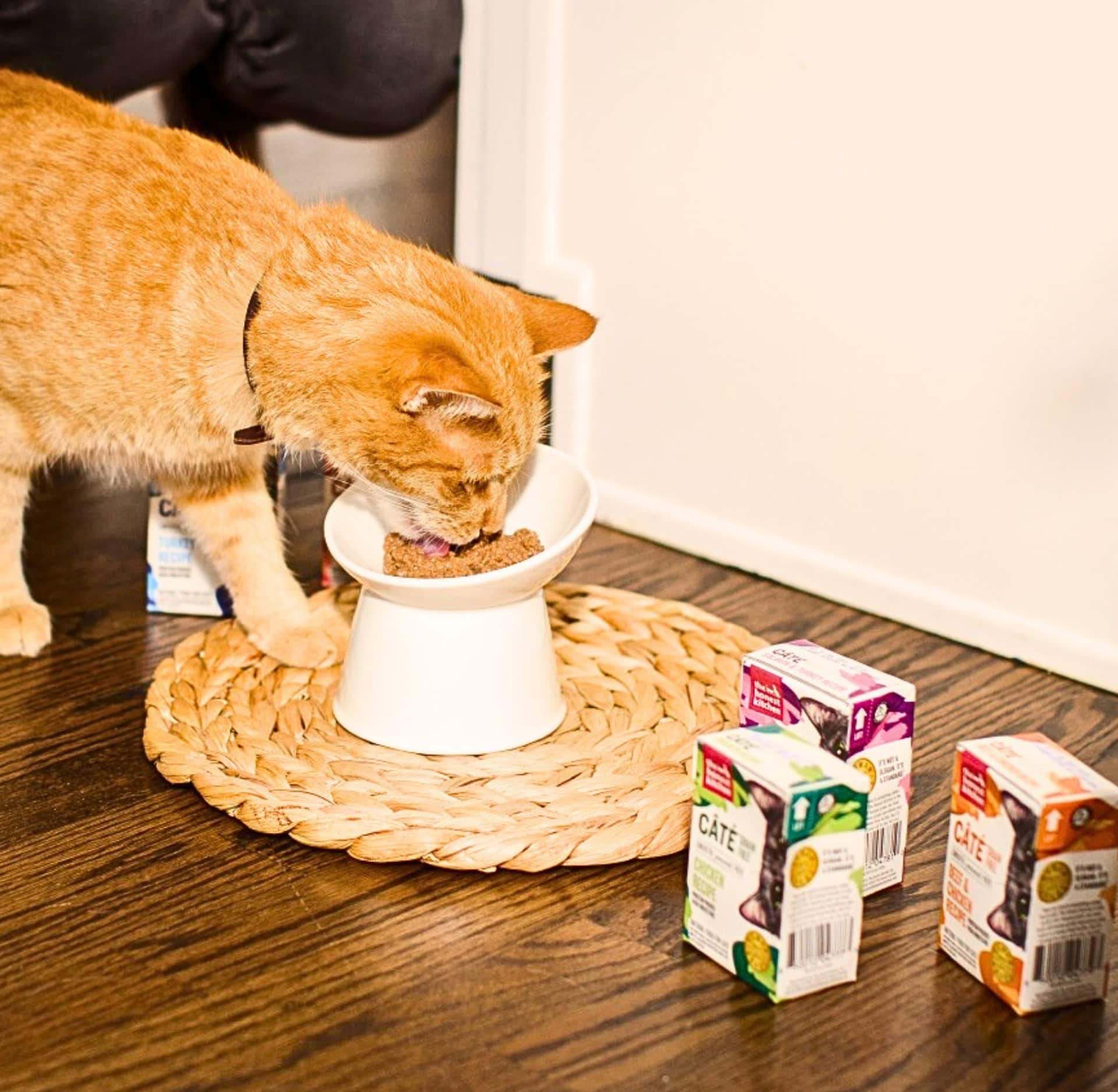
Using ethical, human-grade, and mostly organic ingredients, The Honest Kitchen has over 20 years’ experience as one of the most environmentally friendly cat food brands.
With some of the best organic food for cats, the Castor & Pollux ORGANIX range is packed with USDA organic meat and superfoods and is free of artificial preservatives, corn, soy, and wheat.
Index: Sustainable Cat Food Brands
- The Kind Pet Jump to brand
- The Honest Kitchen Jump to brand
- Castor & Pollux ORGANIX Jump to brand
- Lily's Kitchen Jump to brand
- Tender & True Jump to brand
- Halo Jump to brand
- Petcurean Jump to brand
The Kind Pet
Price Range: $49–$55
The Kind Pet lives up to their name with products that are not only kind to pets but the planet, ranging from eco-friendly dog toys we give our own pup to sustainable cat food.
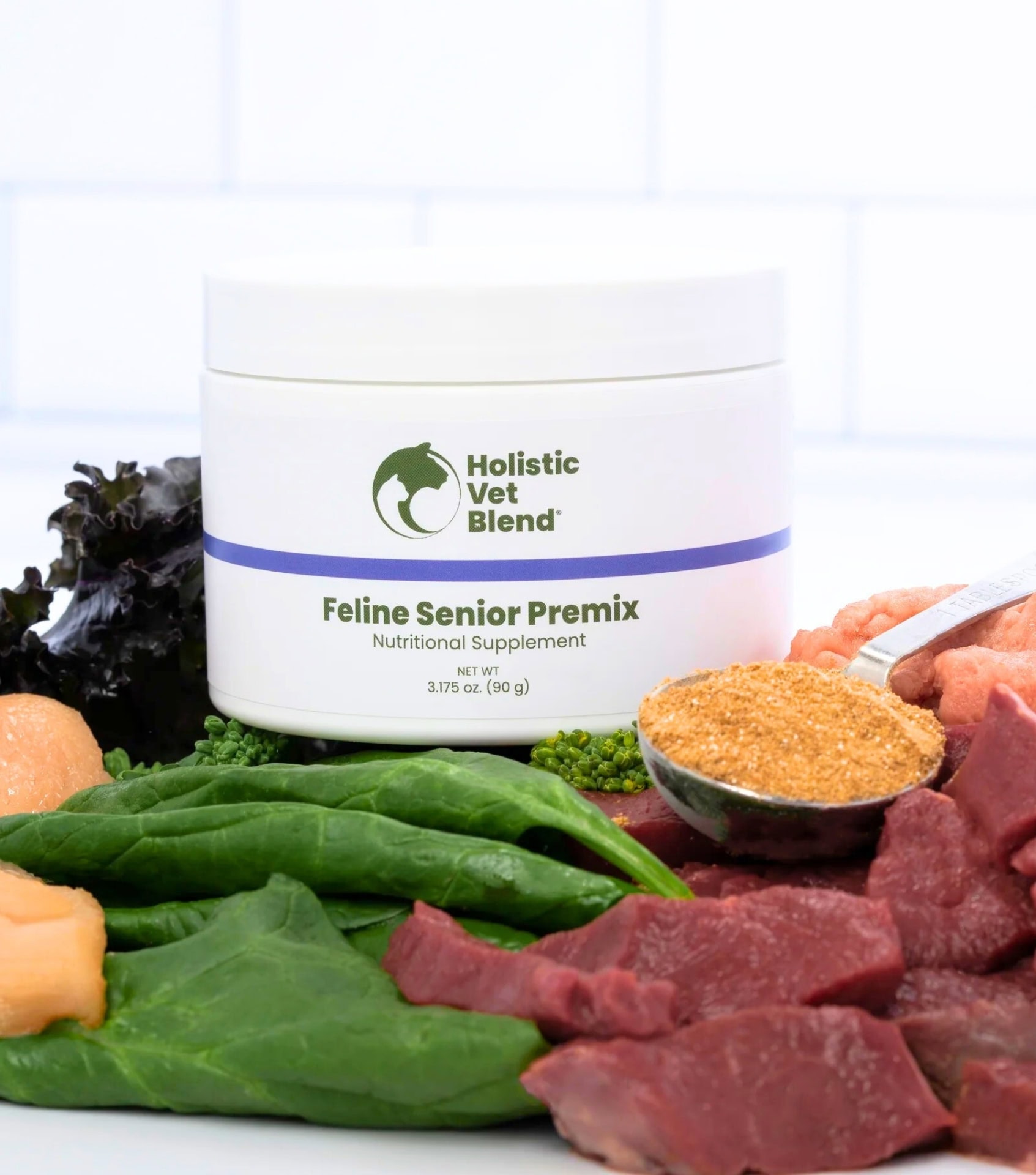
Well, to be precise, it’s a sustainable supplement to your cat’s food. The Holistic Vet Blend® Feline Premix, was create by hollistic vet Dr Dody Tyneway Robi DVM, “to empower the consumer to choose healthy ingredients, whether they are organic, humanely reared, seasonal or local ingredients, and provide the necessary minerals and vitamins to balance them”.
With wholesome human-grade and never dehydrated ingredients like New Zealand grass fed beef liver, heart and kidney, ginger, taurin, and more, it’s designed to cover your the more difficult aspects of your cat’s nutritional needs to you can make their own food without worrying whether they’re getting the proper nutrients and amino acids.
Choose between an adult/kitten or a senior cat formula, both of which are made in the USA, satisfy AAFCO and NRC guidelines, and tested for heavy metals, contaminants, and bacterial contaminants.
One plastic tub contains enough for one month of feeding per cat, which you use by simply creating one large batch of food, adding the indicated amount for your recipe by weight, and refrigerating or freezing the excess.
Your order will come in 40% recycled cardboard from The Kind Pet’s carbon-neutral warehouse.
The Honest Kitchen
Price Range: $7–$64
With a dog constantly suffering from ear infections, Lucy Postins began exploring food ingredients, and eventually formulated her own line of human-grade cat food and dog food.
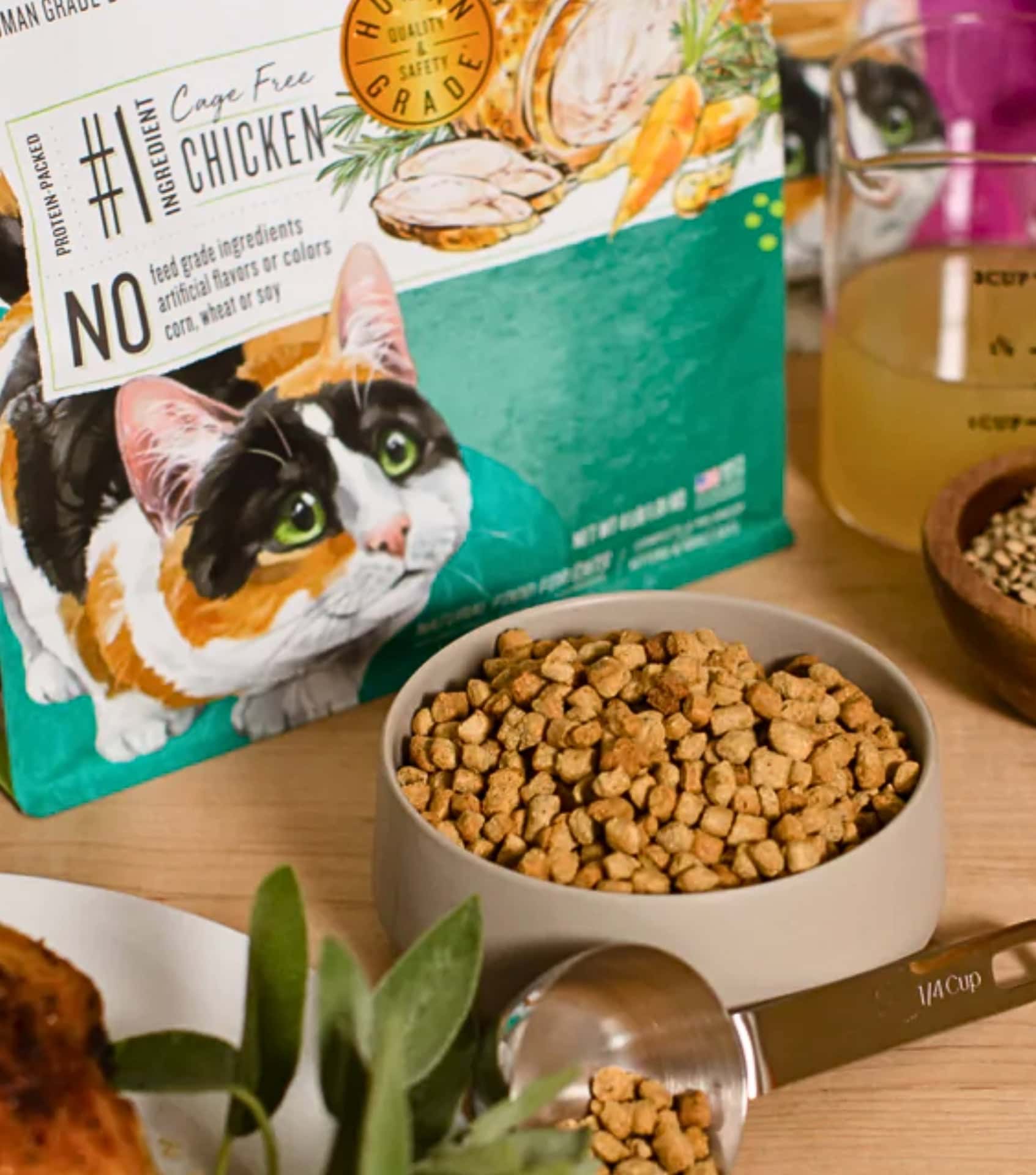
Humanely raised free-range chicken, Marine Stewardship Council-certified fish, organic grains, and non-GMO produce are some of the ingredients that The Honest Kitchen is cooking up for cats of all life stages, crafted with a vet nutritionist to support healthy stools, urinary tract health, healthy digestion, and more.
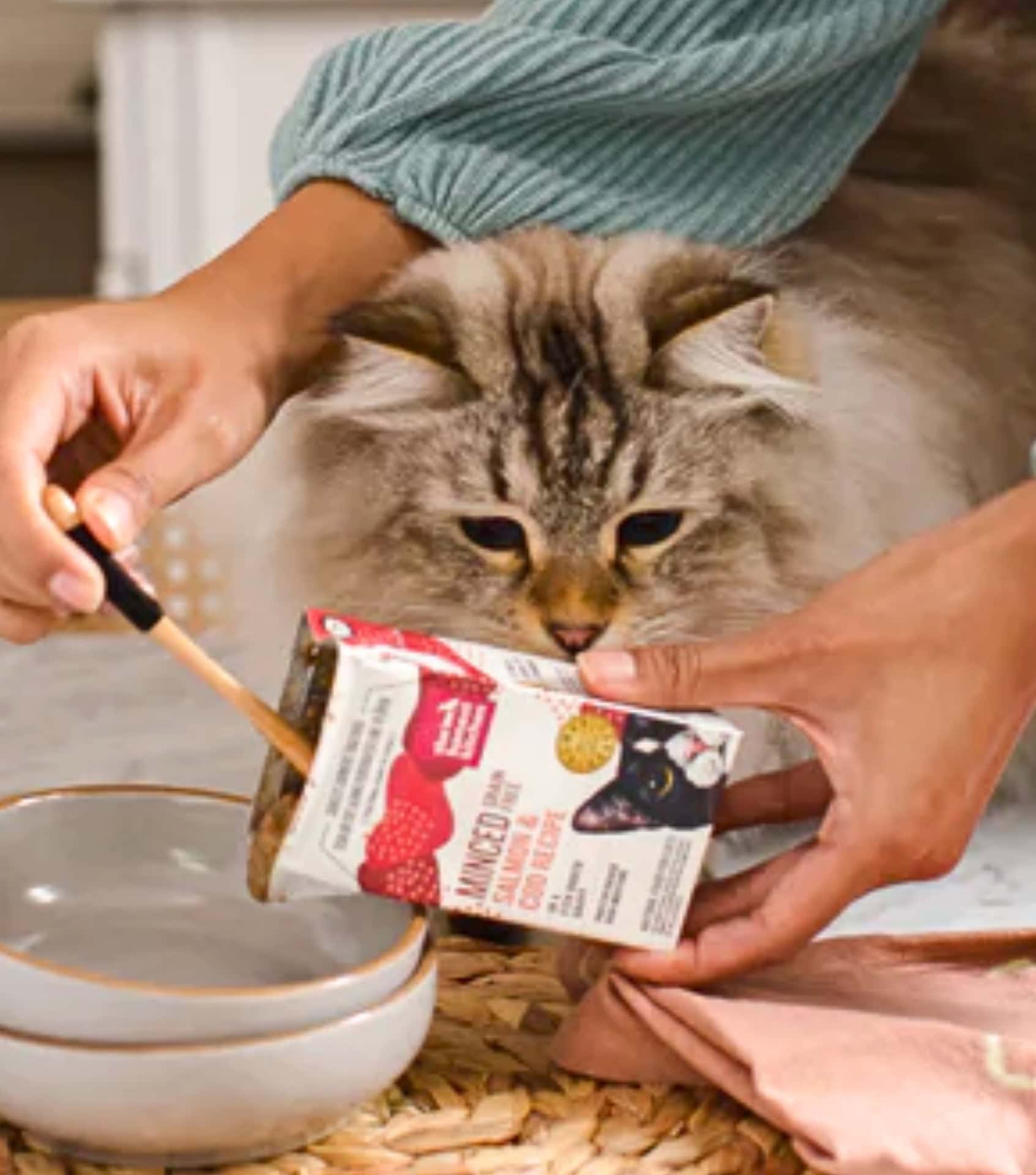
With some of the best organic wet cat food around, theirs features recognizable ingredients like dandelion greens, salmon, duck, blueberries, and carrots. For kitties with a refined palate, you can impress them with “câté” (read: chicken, turkey, salmon & turkey, beef & chicken, or salmon & cod pâté).
Unlike most brands, The Honest Kitchen’s pet food isn’t made of 4D meats (dead, dying, diseased, or disabled). You also won’t find any fillers or artificial flavors, colors, or preservatives on the ingredient list.
The dehydrated and dry cat food are no different, and they also offer cat treats, protein-packed toppers, and supplements to support the overall health and wellness of our feline friends.
In addition to being fit for human consumption, The Honest Kitchen ethically and transparently sources non-GMO and largely organic ingredients—84% of which are from North America.
The Certified B Corp also offers a special discount for 501(c)3 nonprofit animal shelters and rescues.
Castor & Pollux ORGANIX
Price Range: $43–$53
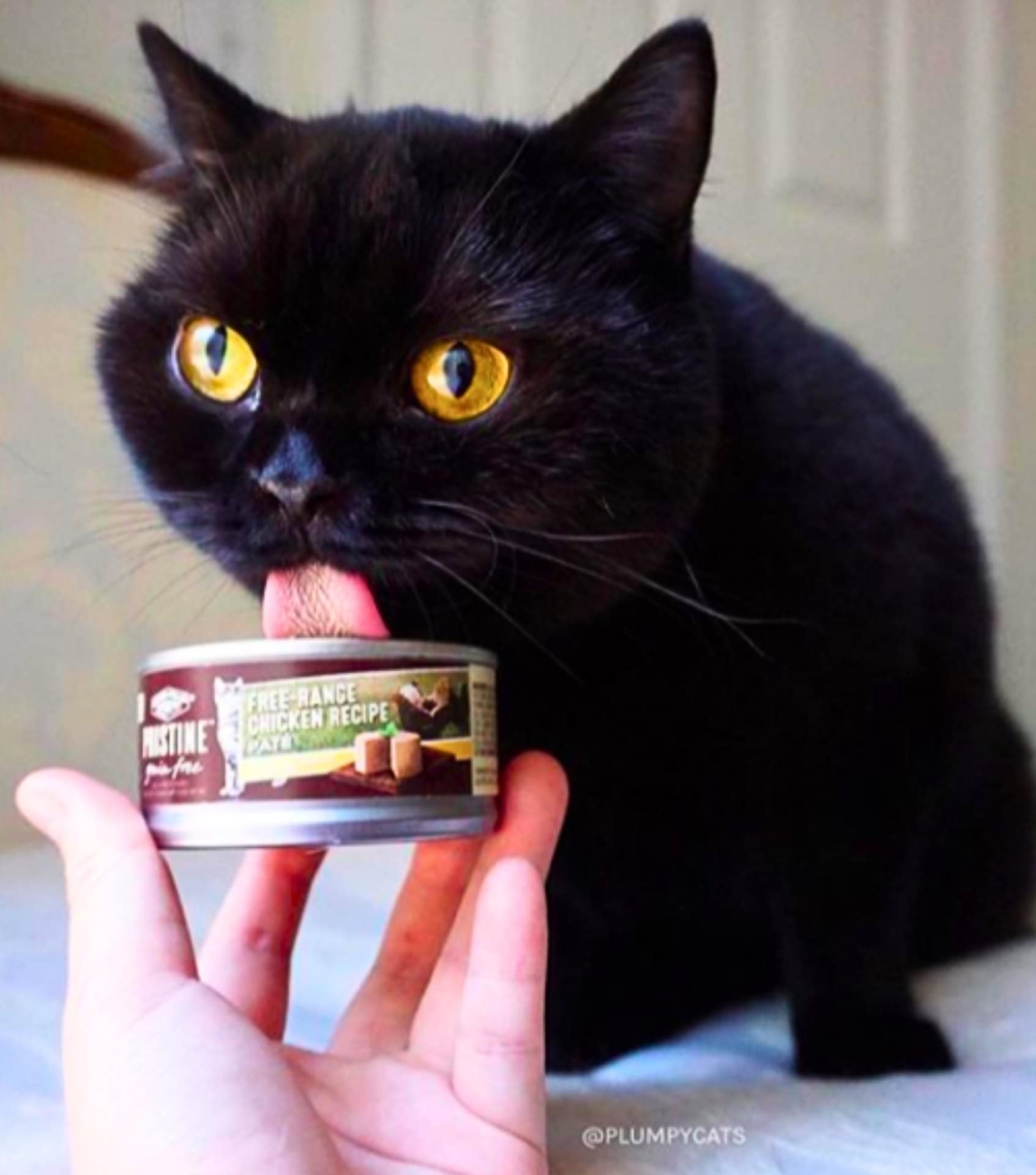
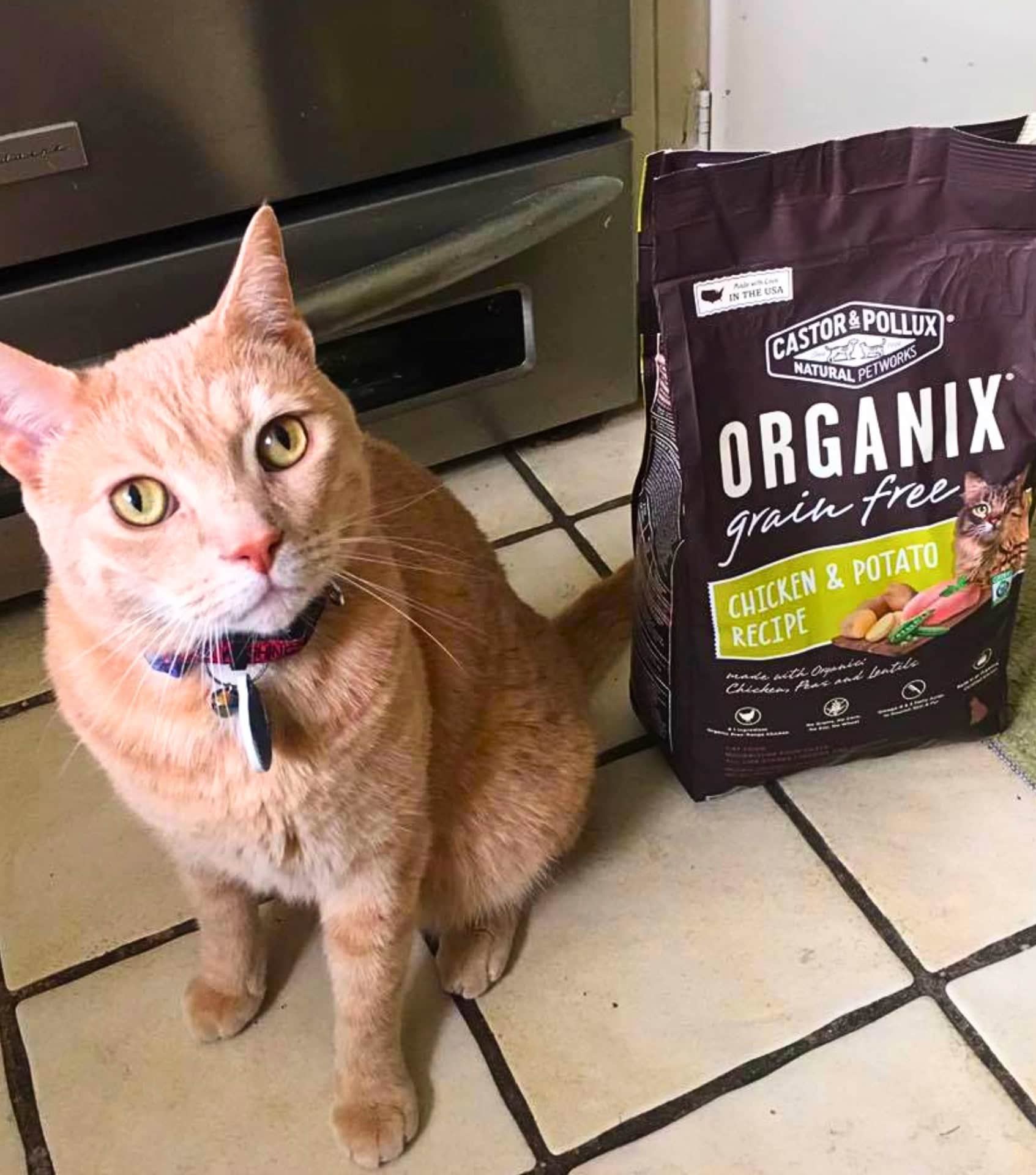
Organic meat is the #1 ingredient in the eco-friendly cat foods offered by ORGANIX by Castor & Pollux. They boast the only complete line of USDA organic certified cat and dog food.
The organic free-range chicken meal or turkey meal base is supplemented with nutrient-packed and USDA-certified organic superfoods. These include brown rice, blueberries, coconut flour, flaxseed, dried egg, coconut oil, and cranberries.
Both eco-friendly wet cat food and dry varieties are available. While some formulations are designed for kittens, most are suitable for adult cats and all life stages.
You’ll never find wheat, corn, or soy in ORGANIX products and products are cooked with love in an organically certified USA kitchen.
Lily's Kitchen
Price Range: £1–£93
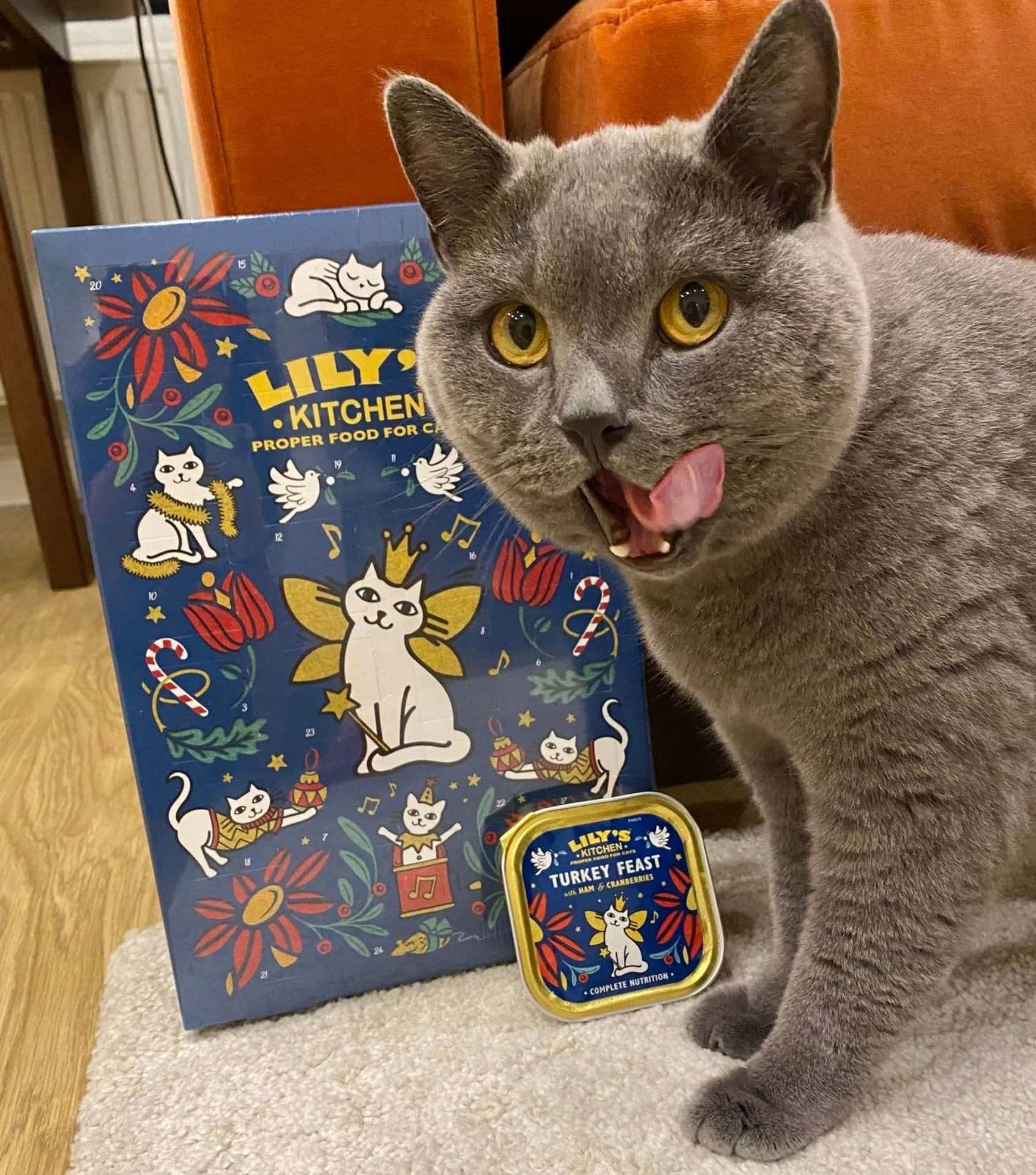
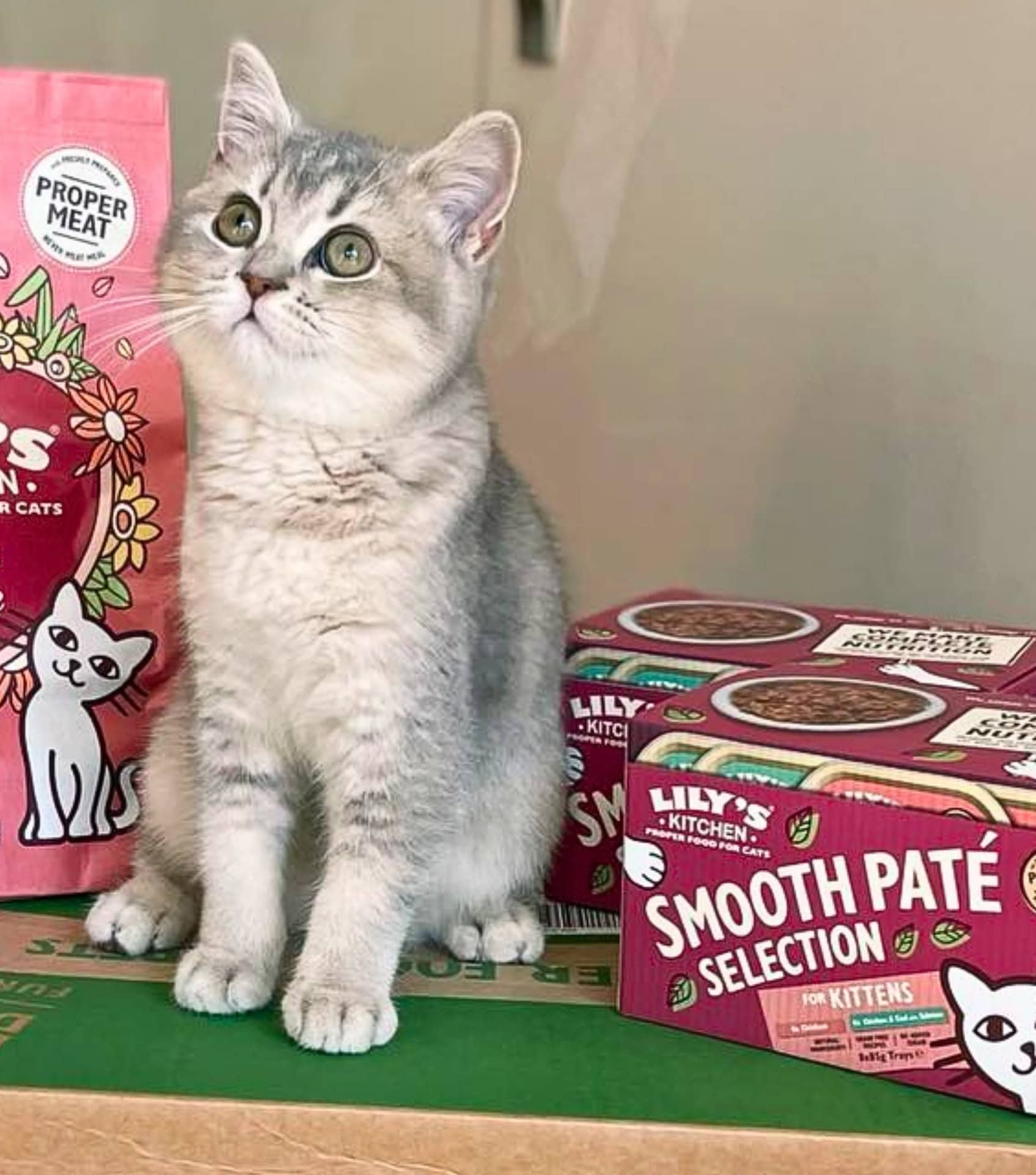
Only available in the UK, Lily’s Kitchen was inspired by Lily, company founder Henrietta’s dog, to provide other pet parents with wholesome ingredients and vet and nutritionist-backed recipes.
Harnessing the “power of proper food,” their recipes are free of bone meal, meat meal, and rendered meat. Instead, offal—high in amino acids like taurine—is used. It’s paired with herbs and botanicals, such as antioxidant-rich marigold petals and mineral-rich burdock root. Ingredients are freshly prepared and minimally cooked to retain most of their natural benefits. They’re also ethically sourced and some are organic.
Shop by age or special diet, or simply peruse the range of wet food, dry food, treats, selection boxes, and extras.
With a diversity & inclusion policy and an environmental policy that highlights initiatives like using recyclable packaging and renewable energy, it’s no wonder Lily’s Kitchen is a Certified B Corp.
Tender & True
Price Range: $13–$74
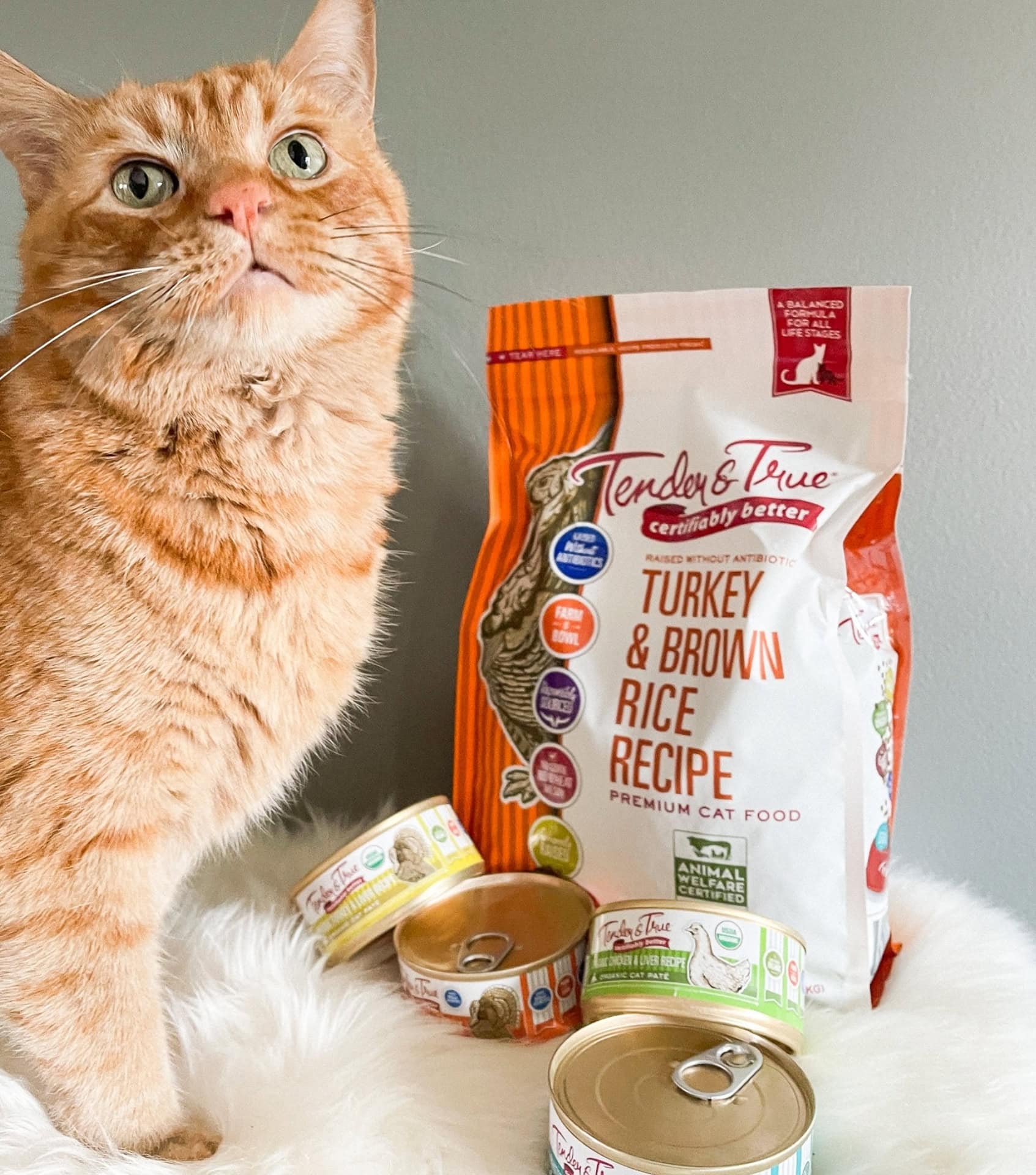
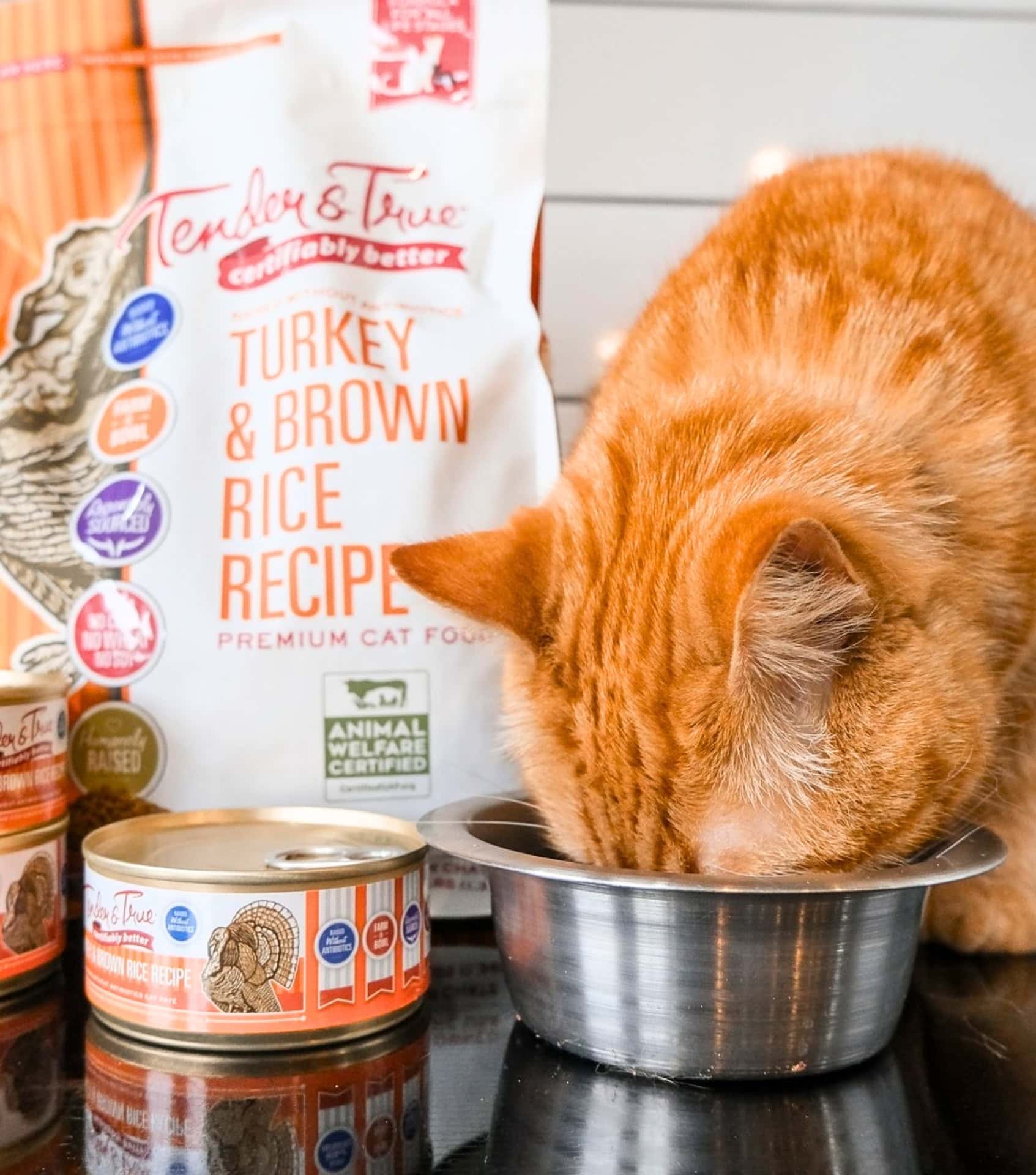
Certified humane and locally-sourced chicken and turkeys from the USA form the basis of what goes into Tender & True’s bagged and canned cat food, some of which is USDA-certified organic. Both dry and wet cat food are available.
This #1 ingredient is followed by a blend of natural ingredients, antioxidants, minerals, and vitamins—no corn, wheat, or soy. If it’s not chicken and turkey, then it’s certified sustainable seafood: MSC-certified ocean whitefish or tuna. These poultry-free cat foods are also grain-free.
In 2014, Tender & True became the first Global Animal Partnership (GAP) certified pet food company and remain the only brand with a full range of humane sustainable cat food and dog food that meets GAP standards. They’re independently owned and based in the Midwest, with personal relationships with the fisheries and growers they source ingredients from.
Halo
Price Range: $13–$57
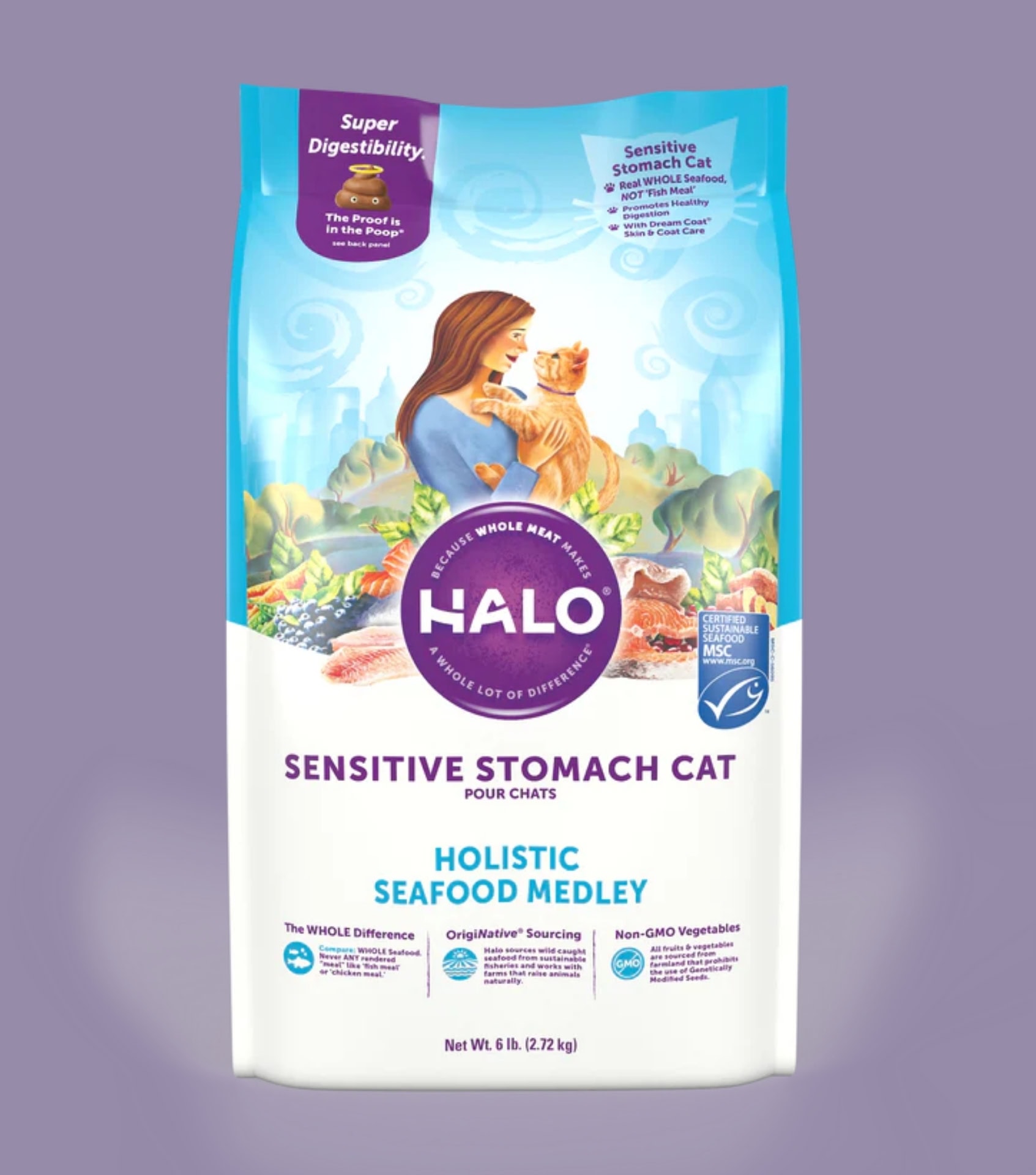
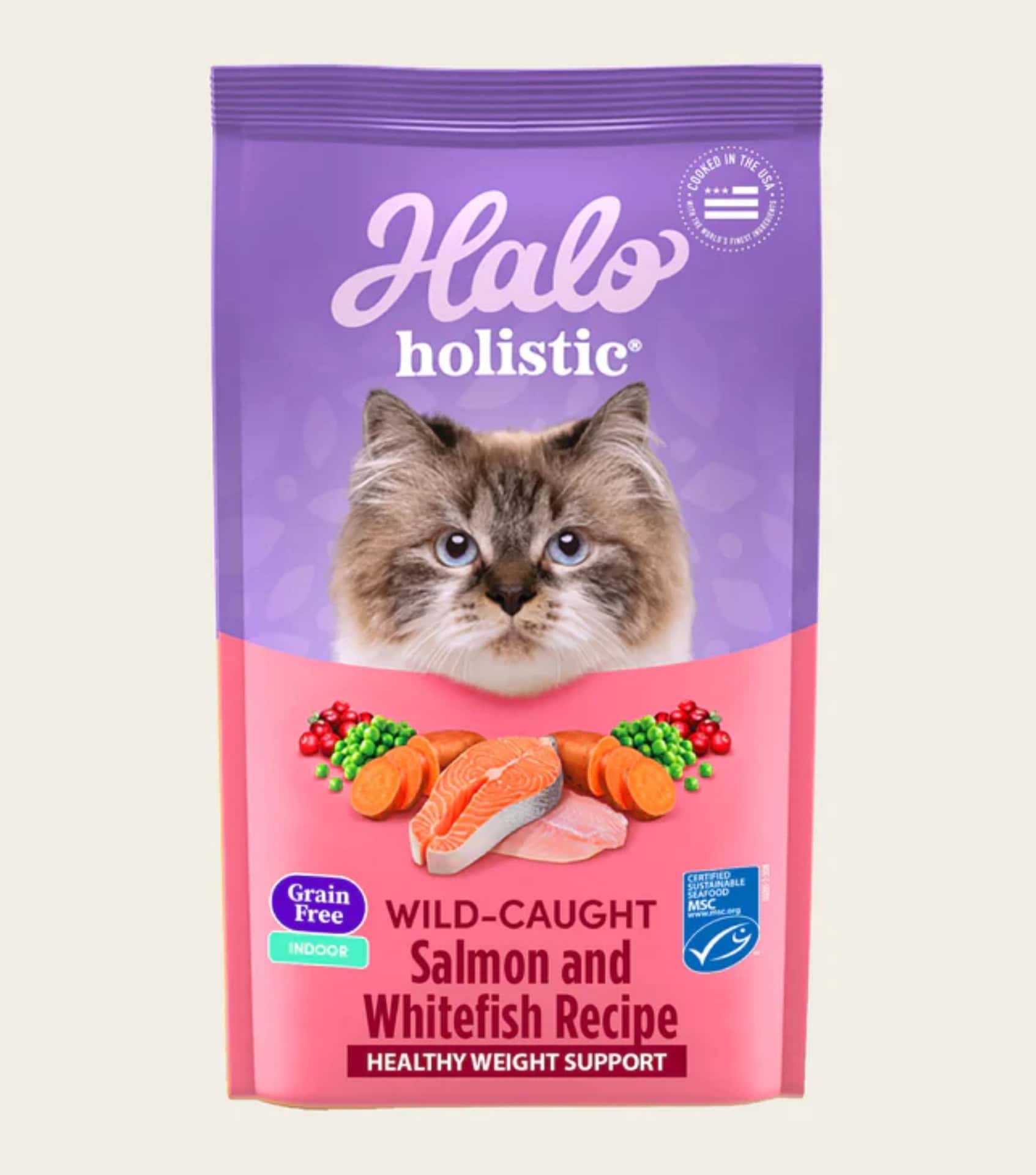
With a line-up that includes sustainable wet cat food, dry food, and treats, Halo has something for every feline friend. They believe that pets are the best kids, and they provide healthy eco-friendly pet foods to unapologetically show that. For more than 30 years, they’ve based their USA-made recipes on natural, science-based nutrition, partnering with vet and nutrition experts for recipe development.
In addition to a range of preferred whole-meat proteins (chicken, red meat, salmon, or lamb), they also offer options with or without grains. Only non-GMO fruits and vegetables are used, and all recipes are free of artificial ingredients and preservatives.
Some of the wet and dry cat foods are free from foods commonly associated with sensitivities (or simply not tolerated by picky eaters): chickpeas, peas, lentils, potatoes, and poultry.
Their Halo Holistic line has certifications from the Global Animal Partnership and Marine Stewardship Council, meaning that some of the pet foods are animal and planet-friendly, too.
Petcurean
Price Range: $55
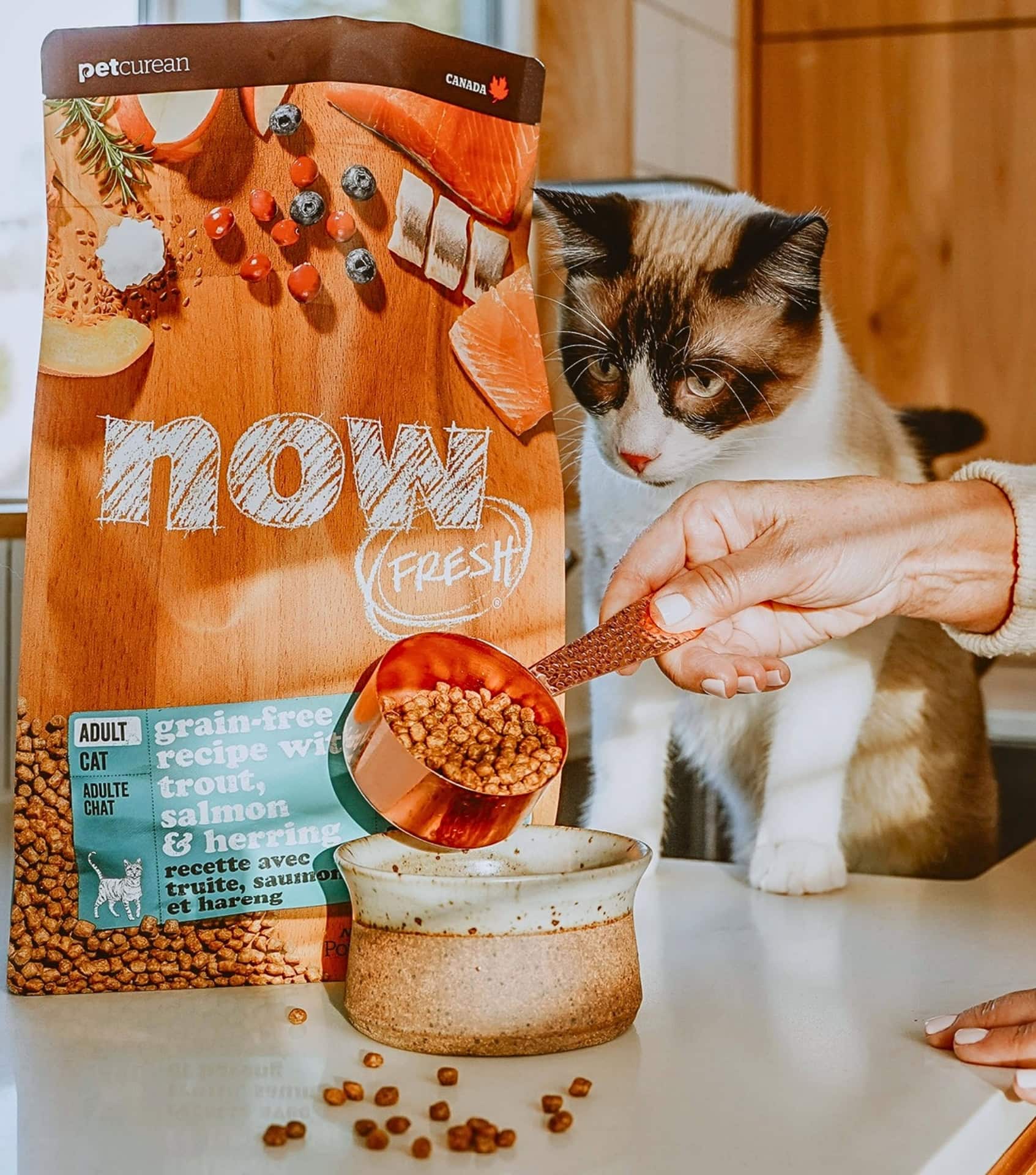
Petcurean began as a little family operation in the Fraser Valley of British Columbia, Canada.
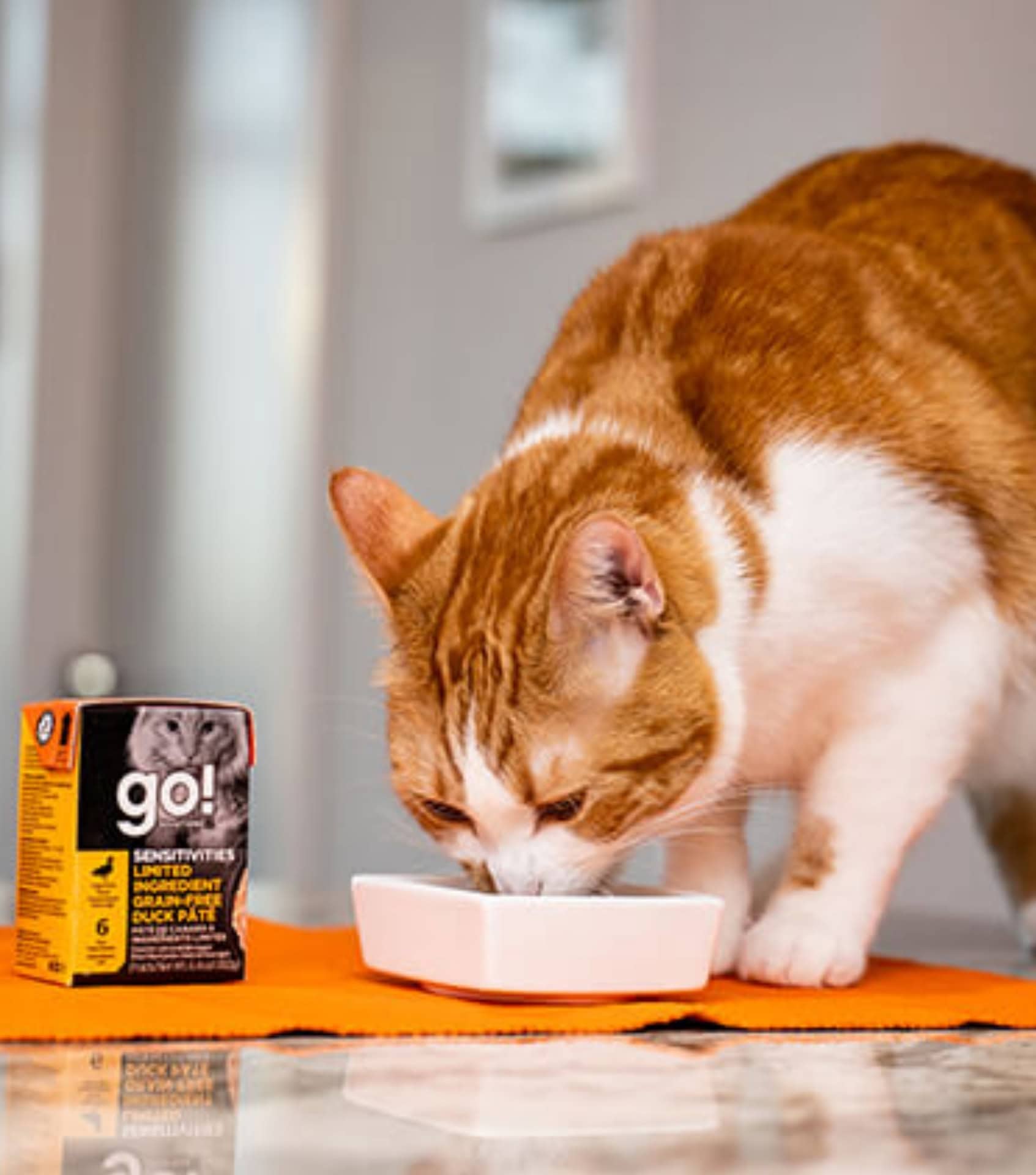
Their eco-friendly cat foods come in wet and dry options for every size and stage of life, including some designed for unique dietary needs, and a GATHER range made with USDA organic ingredients.
If you’re looking for true organic chicken, rest assured the GATHER cat food uses 100% USDA-certified organic chicken along with peas, flaxseed, oatmeal, and barley.
It’s packed with complex carbohydrates, omega fatty acids, and antioxidant-rich ingredients like cranberries. You won’t see artificial ingredients, GMOs, animal byproducts, or any wheat, corn, or soy in the ingredient list.
All of their healthy food options are minimally processed, made with premium-quality meats and fish, and free of animal byproducts or meat meals.
A lot of thought goes into their pet food recipes: which farmer, rancher, or producer they’ll source from; what veggies and fruits will be included; and what flavors will satisfy the pickiest of eaters. Their certified and organic ingredients must meet their five key sustainability pillars: humane animal welfare; protection of water supplies; protection of producer livelihoods; preservation of natural resources; and preservation of biodiversity.
As one of the few brands prioritizing eco-friendly cat food packaging, their commitment extends beyond ingredients. They work with the packaging industry to encourage research that will result in 100% recyclable packaging.
Currently, the dry cat food packaging’s interior liner is made from non-recyclable material (but is essential since preservatives aren’t used to keep the food fresh). Their GATHER line uses packaging that is 30% plant-based (sugarcane) and their wet cat foods come in cans that are 100% recyclable or Tetra Pak recyclable packaging made with FSC-certified paperboard.
They’re carbon-neutral, too.
Why Choose Sustainable Cat Food?
They may be small and cuddly, but cats have an environmental paw print comparable to humans.
According to a 2017 study assessing the impact of the 163+ million dogs and cats in the US, researchers found that our furry friends consume about 33% of the amount of animal-derived calories that humans do.
This means that through their diets, our fur babies are associated with the significant use of land, water, biocides, phosphates, and fossil fuels. Their food is known to release up to 64 million tons of CO2 equivalent greenhouse gas emissions, namely nitrous oxide and methane (which is actually 25x more potent than CO2).
When these animal-derived ingredients aren’t produced in a sustainable and ethical way, they can be associated with depleted land, agricultural runoff, and factory farms with abysmal conditions for other animals—like cows, chickens, and lambs.
Worse, when cat food companies use recipes made up of more than 50% corn, rice, and wheat, it can be linked to biodiversity loss and heavy reliance on agricultural inputs (water, fertilizer, pesticides). But is grain-free cat food or a vegetarian or vegan diet better?
Grains in cat food have been given a bad rap in recent years. As obligate carnivores, a cat’s diet should consist primarily of high-quality meat protein. Many believe that grains (and other plant-based foods) are not a natural food type for these animals and should be avoided or at least kept to a minimum.
However, there’s no conclusive evidence that grains are always a bad thing, and they can provide important nutrition. To sort the wheat from the chaff, we have to look a little closer at the ingredients lists and ask why they’ve been included.
In low quality cat food, grains, and other carbohydrates such as peas and potatoes, are often added as fillers to bulk it out and decrease the cost. But at what expense to a cat’s health?
In recent years, many brands have moved away from using corn, rice and wheat as cheap filler ingredients, offering “grain-free” pet food instead. When the focus is on producing foods with a high meat content using good quality meats, this is all well and good. The problem is that some brands have merely swapped out the grains for other cheap fillers and there is potential evidence linking grain-free meals to worsened heart conditions.
The bottom line: not all “grain-free” cat foods are created equally. Look for ones that prioritize a high meat content and avoid unnecessary fillers, whether grain-based or otherwise.
Vegan & Vegetarian Diets For Cats
What about vegan cat food? Can cats just go plant-based to support the planet?
No; as obligate carnivores, cats thrive on meat-based diets. In the wild, this includes small prey like rodents, and even large prey, such as deer. While domesticated cats may only “hunt” the light from your laser pointer, they still require a similar diet—unlike dogs which can eat a meat-free diet.
As members of the Carnivora (flesh devourer) order of mammals, cats are unable to synthesize or convert fatty acids, amino acids, and specific vitamins, which means they must get them from animal protein, like meats and organics.
This is why it’s important to look for high-quality meat ingredients and cat food with sustainable fish to provide balanced nutrition. To reduce the carbon impact of the meat industry, seek out locally-sourced and certified humane sources, for everything from chicken broth to chicken meal.

Heather earned a Bachelor of Science in Human Nutrition from the The Ohio State University before completing a Masters in Environment at The University of Melbourne. She then went on to achieve a Permaculture Design Certificate at the Djanbung Gardens. Heather feels best when she is barefoot in a forest or has dirt under her fingernails. She’s constantly daydreaming about her homesteading future and has a rapidly-growing list of the best local (and not-so-local) hiking trails. When she’s not busy hoarding an embarrassing number of upcycled glass jars, experimenting with urban composting, or quelling her eco-anxiety on a long run, Heather spends her 9-5 working for a sustainable agriculture nonprofit, where she advocates for state and federal policies that support thriving farmers and a habitable future.