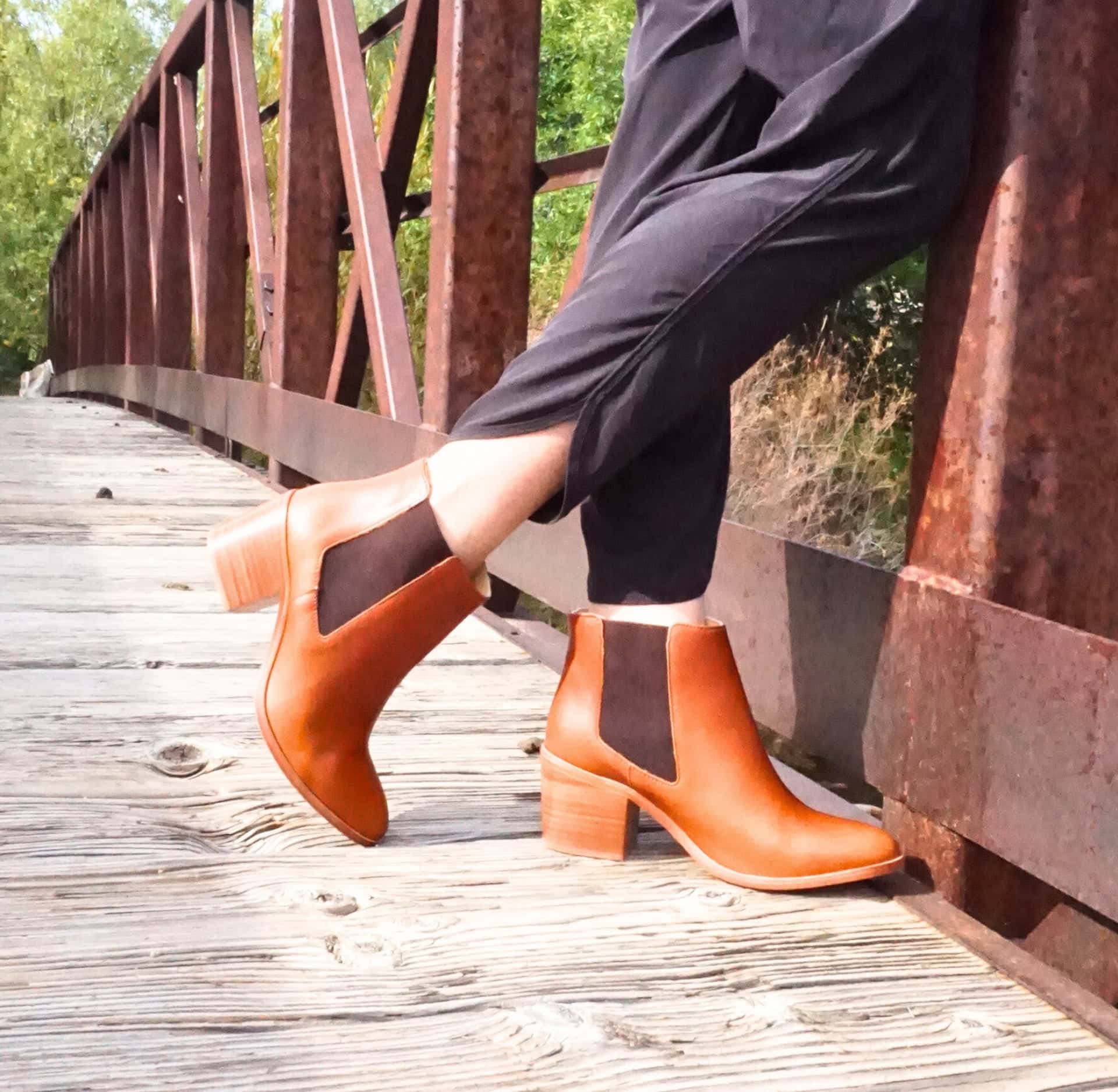
These sustainable boots aren’t only made for walking. They’re made for trekking through snow, stomping in puddles, and hiking canyons.
Just like we want our shoes to be functional and beautiful, so too do we want our planet’s natural beauty to remain picturesque. This means making sure our footprints, in the literal sense, are as light as possible.
But boots are admittedly one of the more difficult wardrobe items to make ethically and dispose of responsibly, so we’re putting our best foot forward to reduce our impact by scouting out the most eco-friendly boot brands. And not only do these brands use responsible materials but also prioritize ethical labor and green business practices.
As we stomp through our articles over the next few months, we soon be using our new Brand Rating System and its 22 criteria (looking at factors like chemical use and climate impact) to ensure we’ve included only truly boot-iful brands that are stepping up (sustainably speaking) to the top of the footwear industry. See our explainer here.
We independently research all featured brands and we ask them to confirm their claims. In many cases we personally review recommended products. This post contains affiliate links which means we may earn a commission if you buy something. Learn more here.
Ethical Boots Kicking Fast Fashion To The Curb
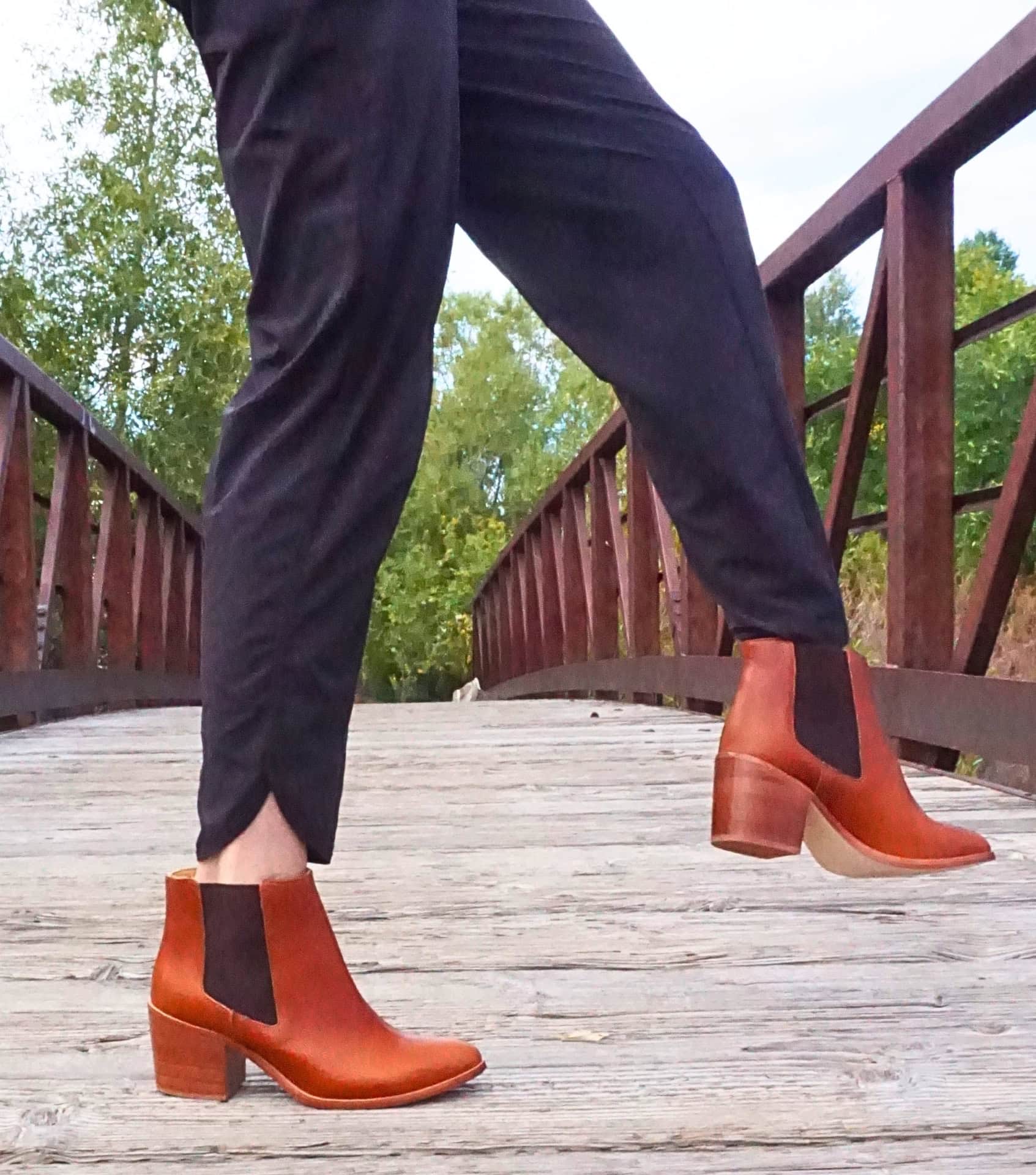
Tried and tested, we love wearing Nisolo’s Chelsea boots. They are one of the most sustainable boot brands prioritizing LWG-certified leather, transparent supply chains, and fair labor practices.
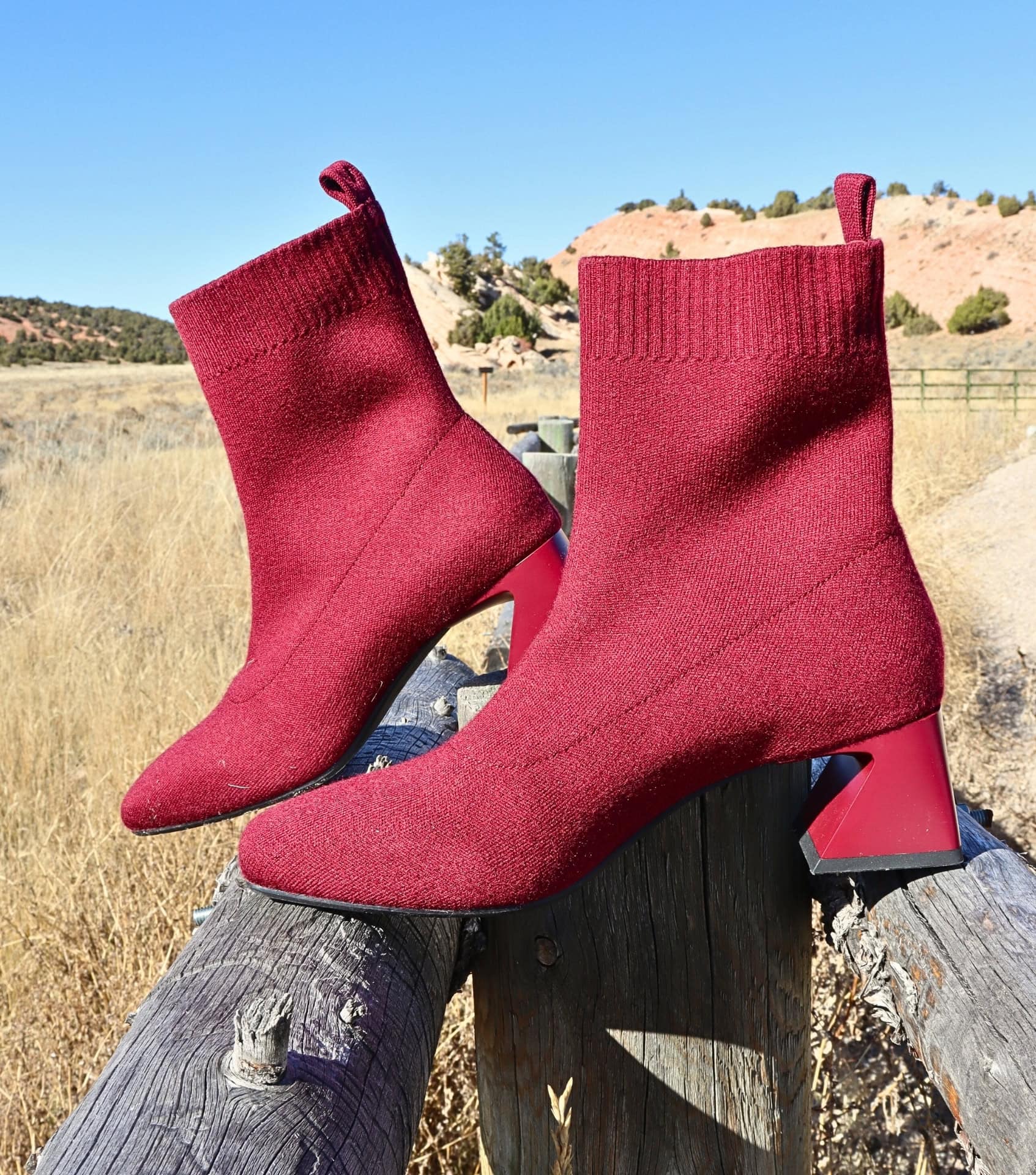
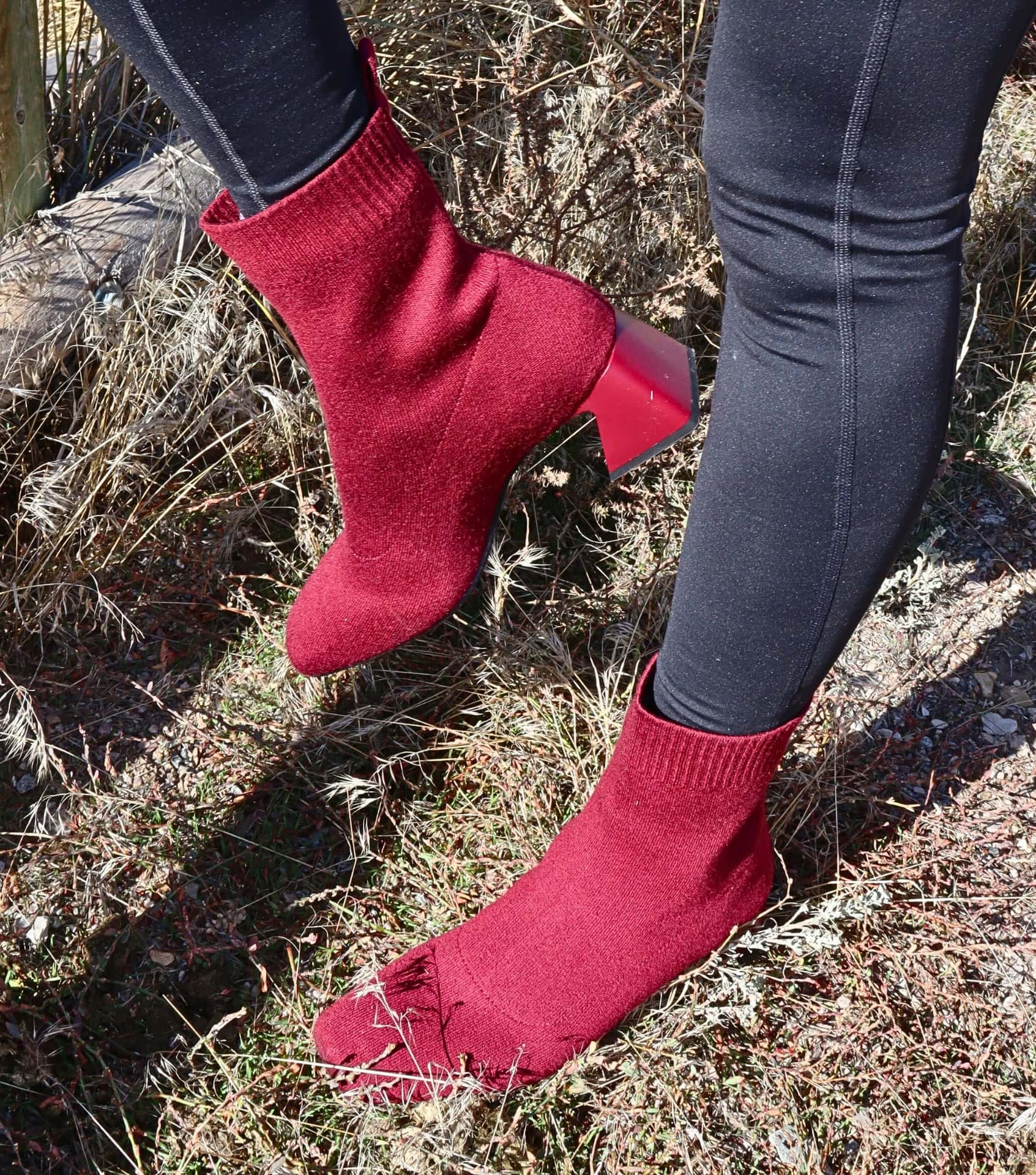
We’ve done a lot of walking in VIVAIA’s Square-Toe heeled boots and they are as comfortable as they are eye-catching. Focusing on low-impact materials, this brand gives virgin plastic a literal kick by focusing on biobased and recycled fabrics.
Index: Sustainable Boot Brands
- Nisolo Jump to brand
- Vivaia Jump to brand
- Matisse Footwear Jump to brand
- Sezane Jump to brand
- NAE Jump to brand
- Christy Dawn Jump to brand
- Bhava Jump to brand
Nisolo
About Nisolo
Price Range: $165–$260
This Nashville-based company has a vision to bring intentionally designed, minimalist, and ethically-made accessories to people around the globe.
Nisolo covers all of your seasonal footwear needs, with a wide range of eco-friendly sandals for summer and an equally-impressive selection of women’s and men’s ethically-made boots for when the mercury drops.
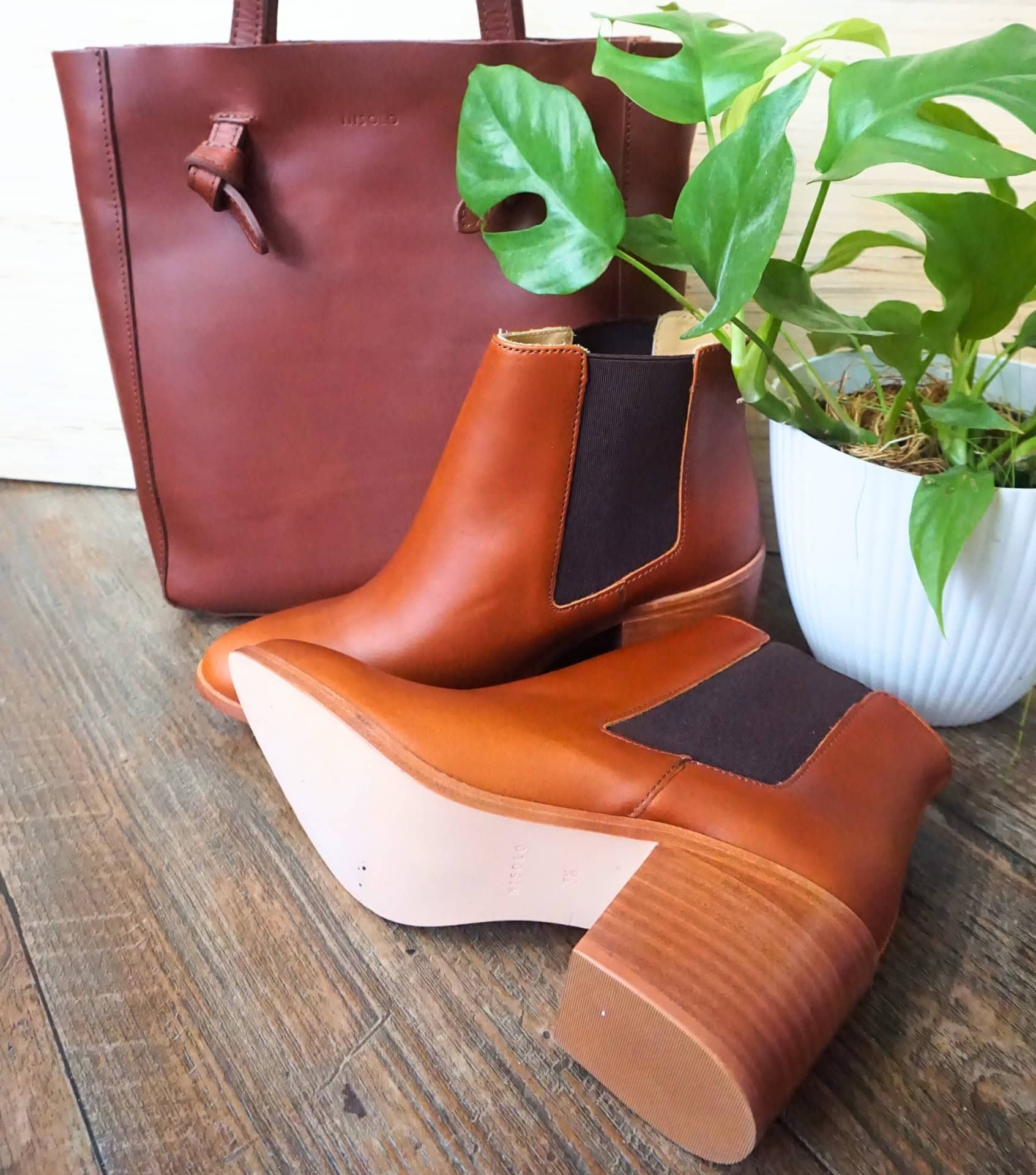
While we love the looks of their lace-up boots, we’re personally fans of the slip-on Heeled Chelsea Boots. Not only are they made with a luxuriously smooth and high-quality leather, but the chunky wooden heel provides ample stability and comfort while still providing some literal style elevation.
Nisolo’s Ethical & Sustainability Practices
Materials:
Nisolo works with certified Leather Working Group (LWG) tanneries to collect ethically-sourced leather that is a by-product of the meat industry. Though they are looking into alternatives to bring vegan options into their range.
You’ll see the standard suede and rubber combination in their winter boots as well as weather-resistant leather in some of their dressier options like their sustainable booties.
Supply chain & labor practices:
Nisolo has its own third-party audited factory in Trujillo, Peru, and partners with two other factories and groups of independent artisans in Mexico and Kenya, respectively.
In their own Peruvian factory, they provide needed employment opportunities for locals, going above and beyond to ensure fair wages and financial support like assisting with home loans. Their family-owned Mexican partner factory adheres to a strict Code of Conduct, which requires that wages are at least 14% higher than the local living wage. Their Kenya-based artisans receive the same rate of higher wages, as well as learning opportunities and healthcare.
Nisolo is a Certified B Corp and started the Lowest Wage Challenge, a movement to encourage brands to be fully transparent by publishing the lowest wage in their supply chain so that improvements can be made and the status quo challenged.
They not only offer fair trade premium perks, but an in-house skills development training program with classes on finances, health, nutrition, English, physical education, and yoga.
Carbon commitments & green practices:
You won’t be chukka-ing out these ethical chukka boots any time soon, as everything here is designed for durability and repairability.
Nisolo is Climate Neutral-certified and offsets its carbon emissions through a partnership with Ecosphere+ to tackle deforestation in the Amazon Rainforest. For more, read their impact report.
Community & charitable giving:
Their circular shoe reclamation program minimizes their contribution to landfill waste by donating returned or damaged shoes to Soles4Souls.
Vivaia
About VIVAIA
Price Range: $139–$199
VIVAIA is a recycled shoe brand that knows a things or two about makingwomen’s boots that are as functional and as they are fashionable.
If you’re in the market for ethical ankle boots with flair, the Regina Pro Square-Toe heeled boots are a sustainable stunner. We’ve been wearing them for over a year now and adore how warm yet breathable the soft, recycled stretch knit upper is. You’d never guess they’re also water-resistant!
VIVAIA’s Ethical & Sustainability Practices
Materials:
VIVAIA’s gives virgin plastic the boot with their use of biobased and recycled materials, like rice husks, herbal foam, recycled PET, and carbon-free natural rubber. They do use some traditional TPE and EVA foams, along with wool in one model of over-the-knee boots. All other styles are vegan.
Supply chain & labor practices:
VIVAIA’s recycled boots are made in a renewable energy powered factory in Dongguan, China, visited regularly to ensure ethical standards and fair wages are upheld.
Carbon commitments & green practices:
They ship in specially-sized recycled boxes to reduce shipping materials and bulk.
Matisse Footwear
About Matisse Footwear
Price Range: $20–$300
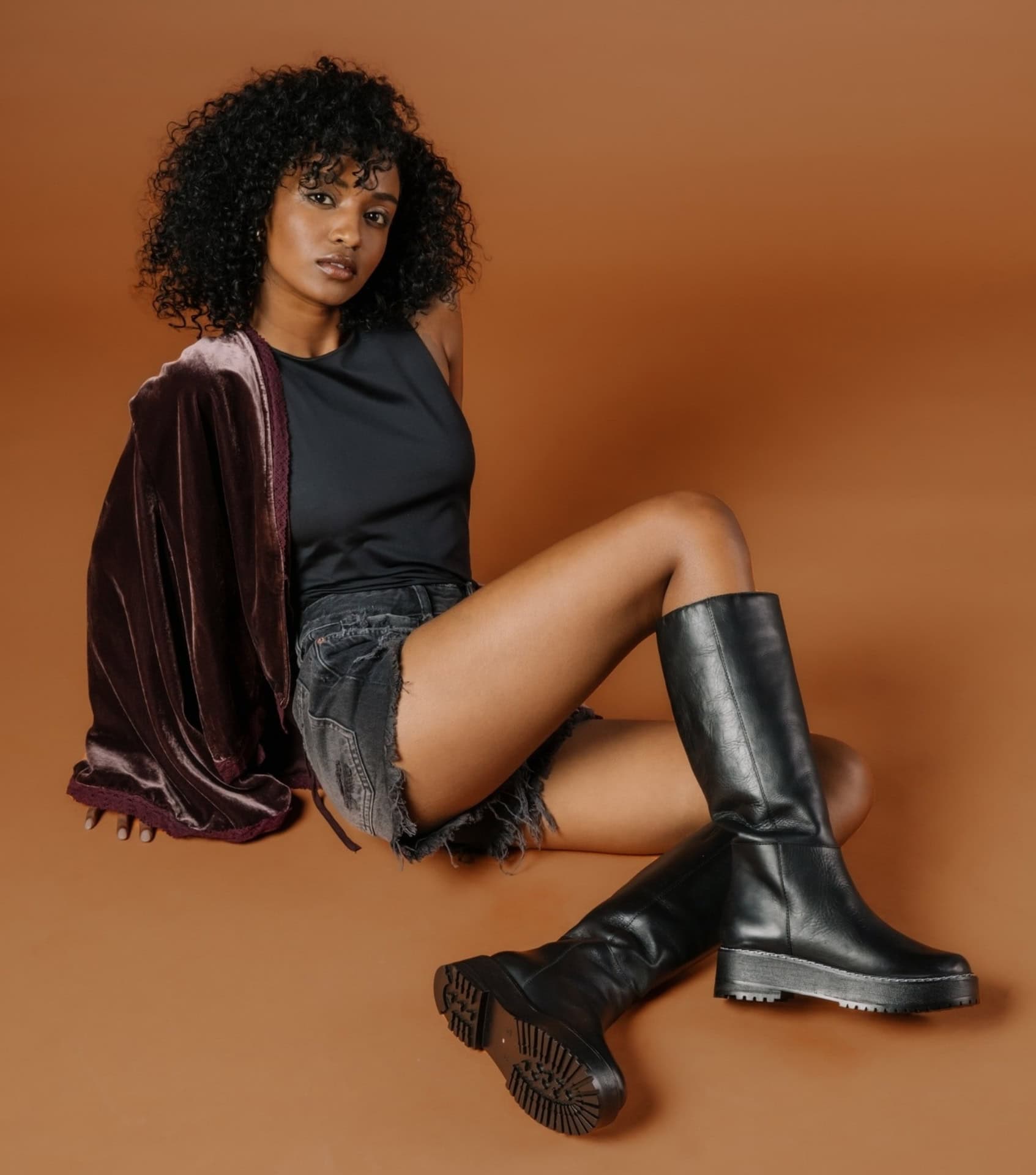
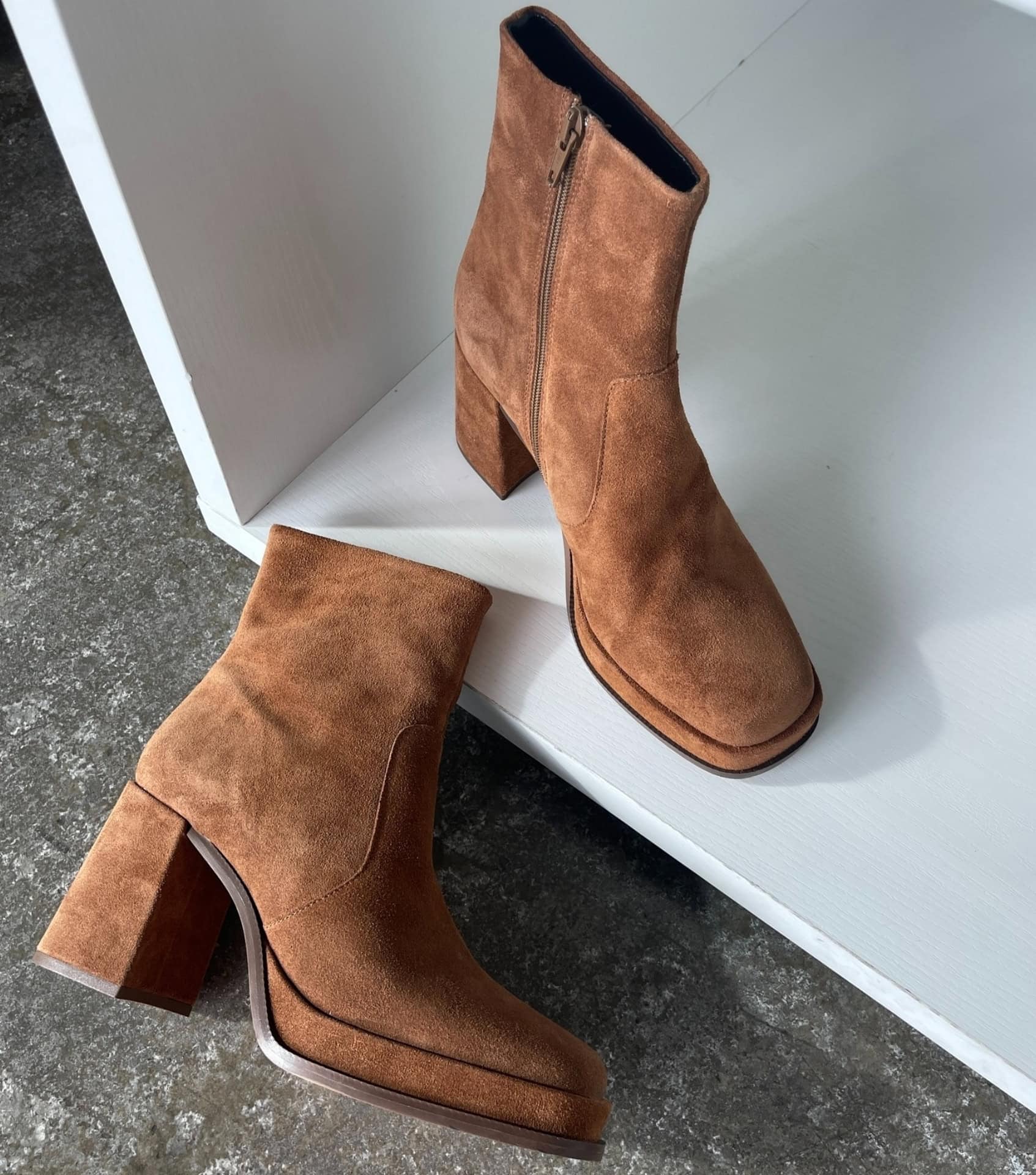
Matisse is an LA-based sustainable luxury brand that combines craftsmanship, quality, and artisanal touches to meet the needs of the modern woman. They have an impressive (and we mean extensive) range of boots in every imaginable style from combat boots to platforms.
Or if western boots are your style, giddyup on over to rodeo-stopping rhinestone-studded Nashville.
Matisse Footwear’s Ethical & Sustainability Practices
Materials:
Their Coconuts by Matisse collection uses PETA-approved synthetic vegan leather (which is PU-based, not PVC) to mimic the look and feel of luxury without the cost of animal cruelty.
The rest are made of animal leather, though we’ll be double-checking on whether this is ethically-sourced leather or not. We would also love to see a filter on their website to make it easier to discern between vegan and non-vegan designs. Whenever possible, they use recycled leathers or other textiles for minor components, like heel wraps, welts, uppers, and straps.
They only used vegetable-based dyes and non-animal-based glues.
Supply chain & labor practices:
Matisse works with factory partners across five countries who meet their standards with regard to fair wages and fair working conditions. Most of the family-owned factories have been in the footwear business for 30+ years and are all regularly audited.
Carbon commitments & green practices:
Matisse works with “nominated tanneries that have worked tirelessly to be cleaner and greener” by using technological advances to lessen watershed waste. Packaging is made from 100% recycled paper products.
Sezane
About Sezane
Price Range: $205–$450
Where vintage meets modernism, there’s no question that Sezane was born in the fashion capital of the world: France. With only four collection drops a year and a monthly curated selection, it would be an understatement to say that Sezane’s goods are sought-after.
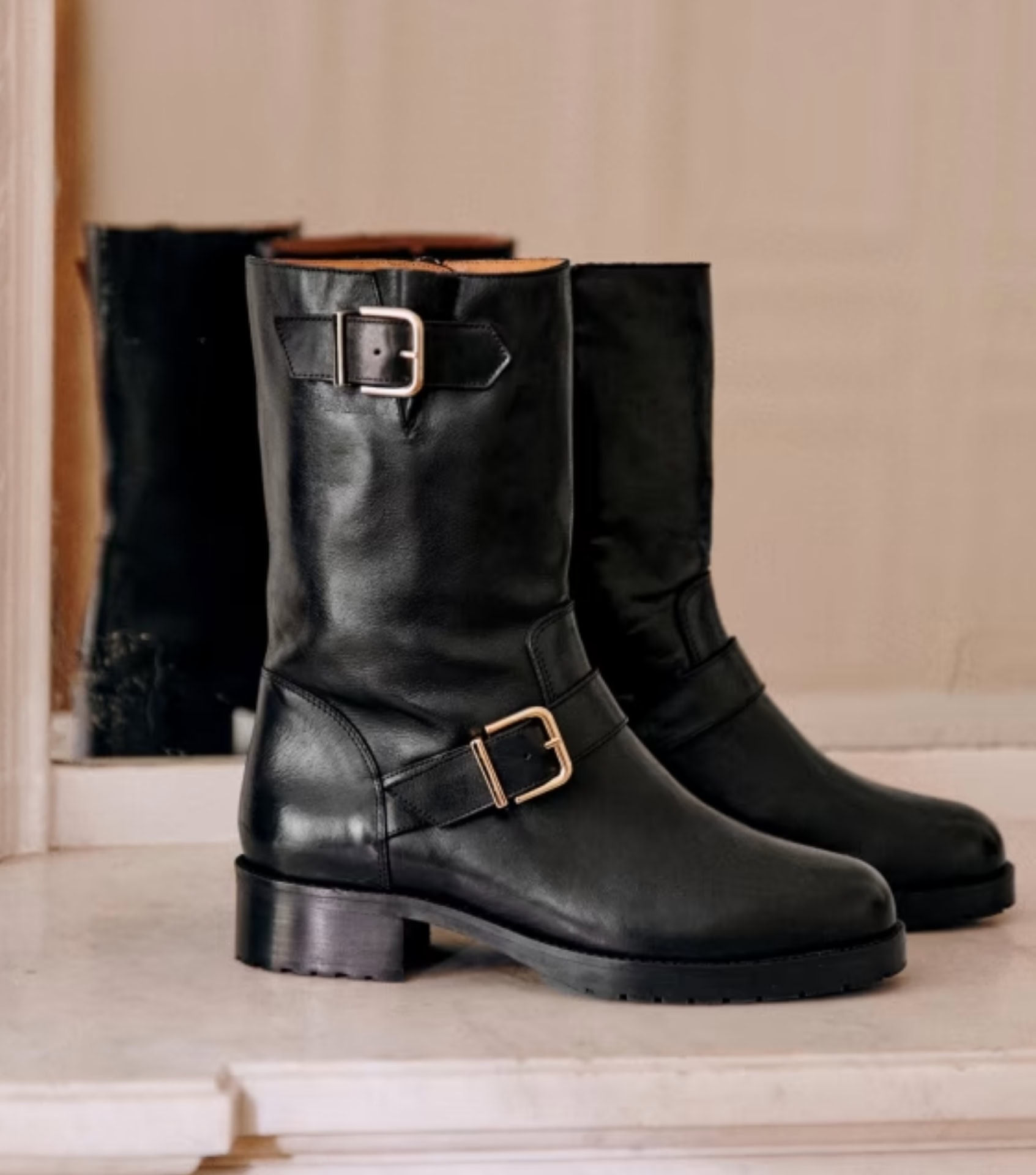
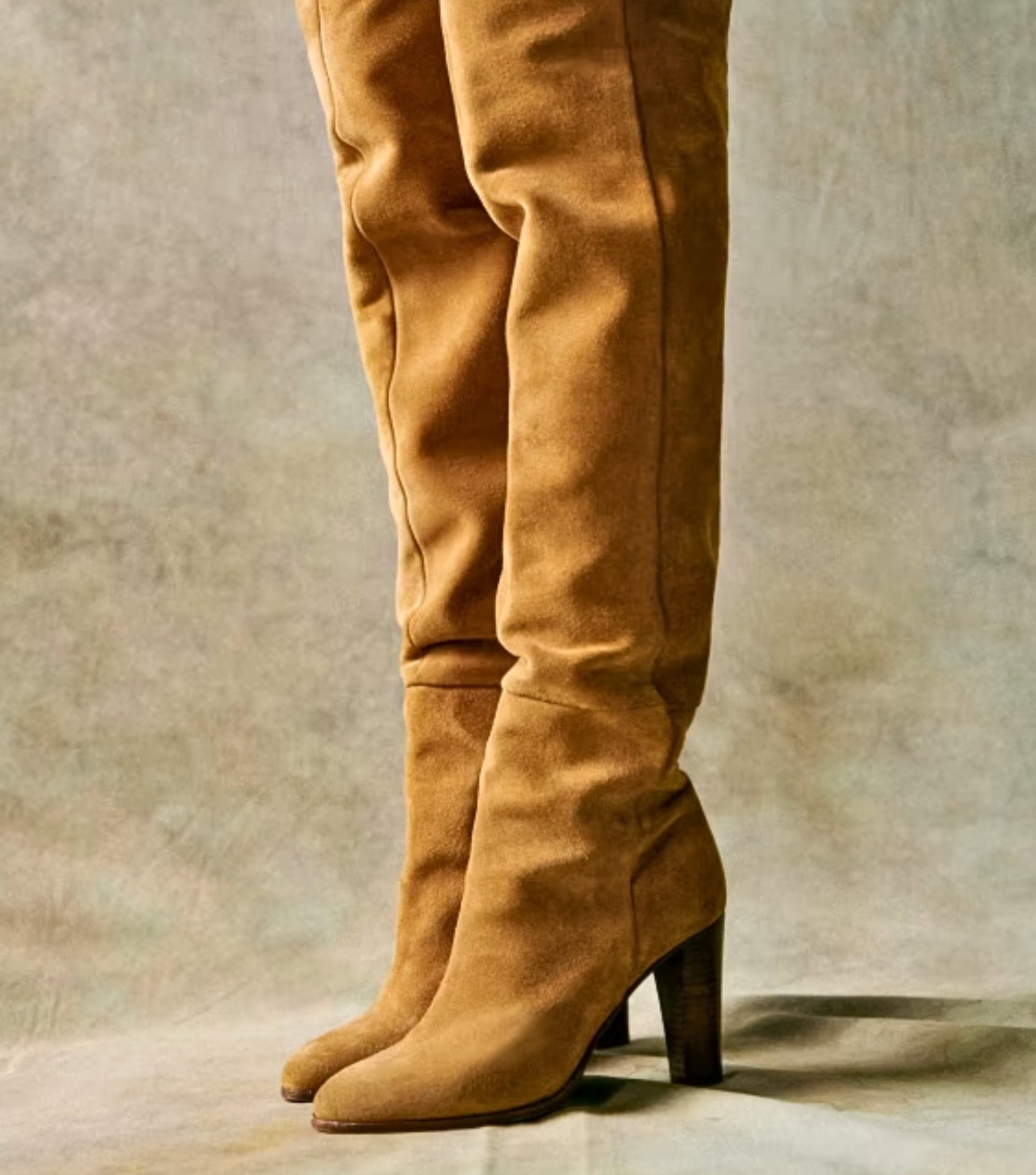
Creating timeless pieces with quality materials, their women’s boots go all the way from ankle length to full leg length—like their Anaelle Thigh High Boots with a split leather exterior and quintessentially 1970s Parisian vibe.
Sezane’s Ethical & Sustainability Practices
Materials:
Sezane uses a vast amount of materials throughout its range of clothing and accessories (most of which are GOTS-certified or have other sustainability certifications).
Their boots mainly consist of ethically-sourced leather (61% of which is vegetable-tanned leather and chrome-free). Unfortunately, that’s still combined with virgin polyester, polyamide, and polyurethane for the time being.
They do incorporate some recycled PET and rubber, but we’d love to see more.
Supply chain & labor practices:
As a Certified B Corp, their leather boots are ethically-made in ateliers across Italy, Portugal, and Spain, which are audited by 3rd parties to meet compliance of Sezane’s Code of Ethics, These compliance criteria follow BSCI, SMETA, ICS, and WCA standards.
Carbon commitments & green practices:
All of Sezane’s locations and factories run on 100% renewable energy. They also use 100% recycled packaging.
NAE
About NAE
Price Range: $129–$181
This PETA-approved Portuguese shoe brand makes some of the most ethical boots, heels, sandals, sneakers, and more. Why? Because NAE is an acronym for “No Animal Exploitation”.
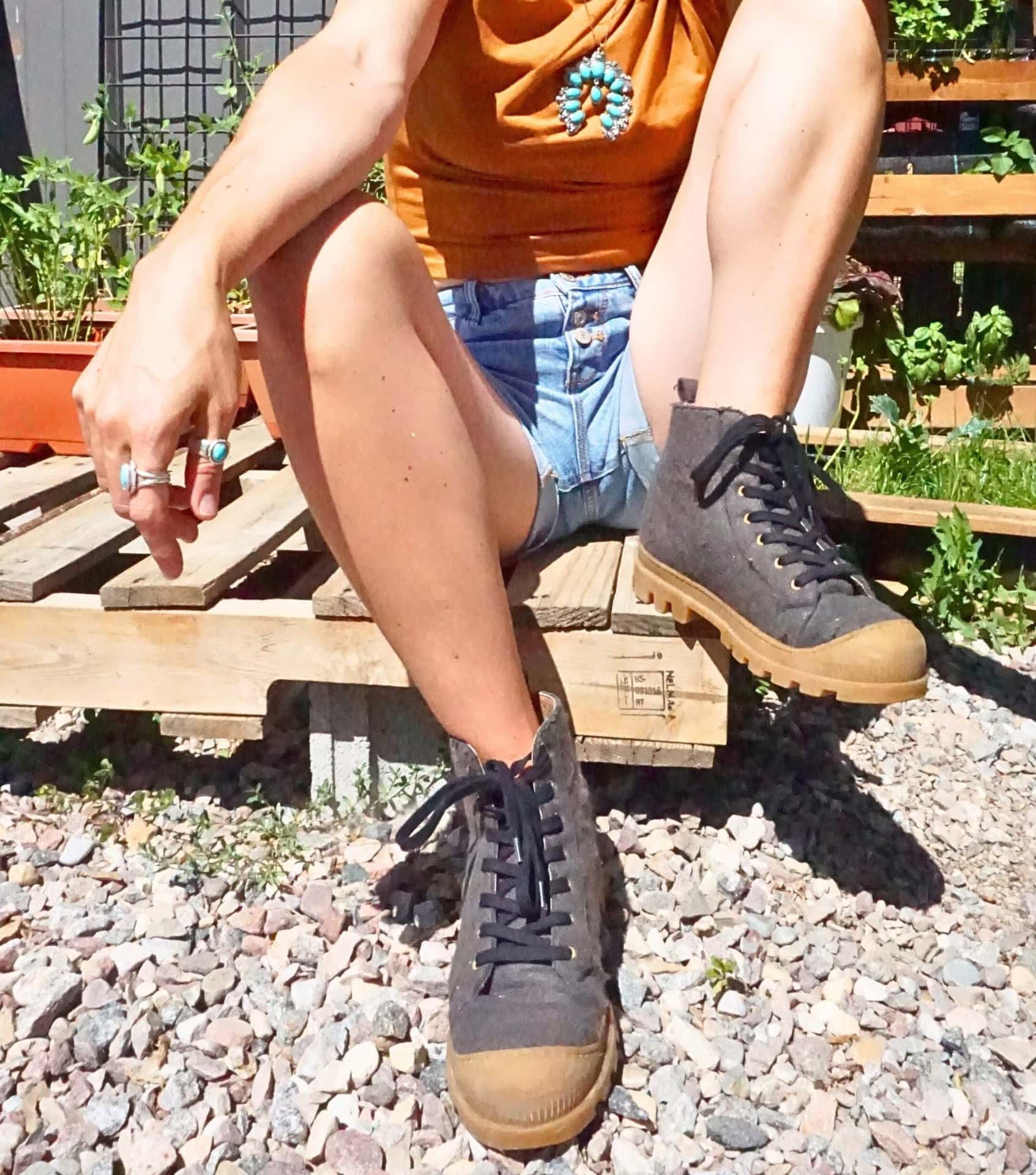
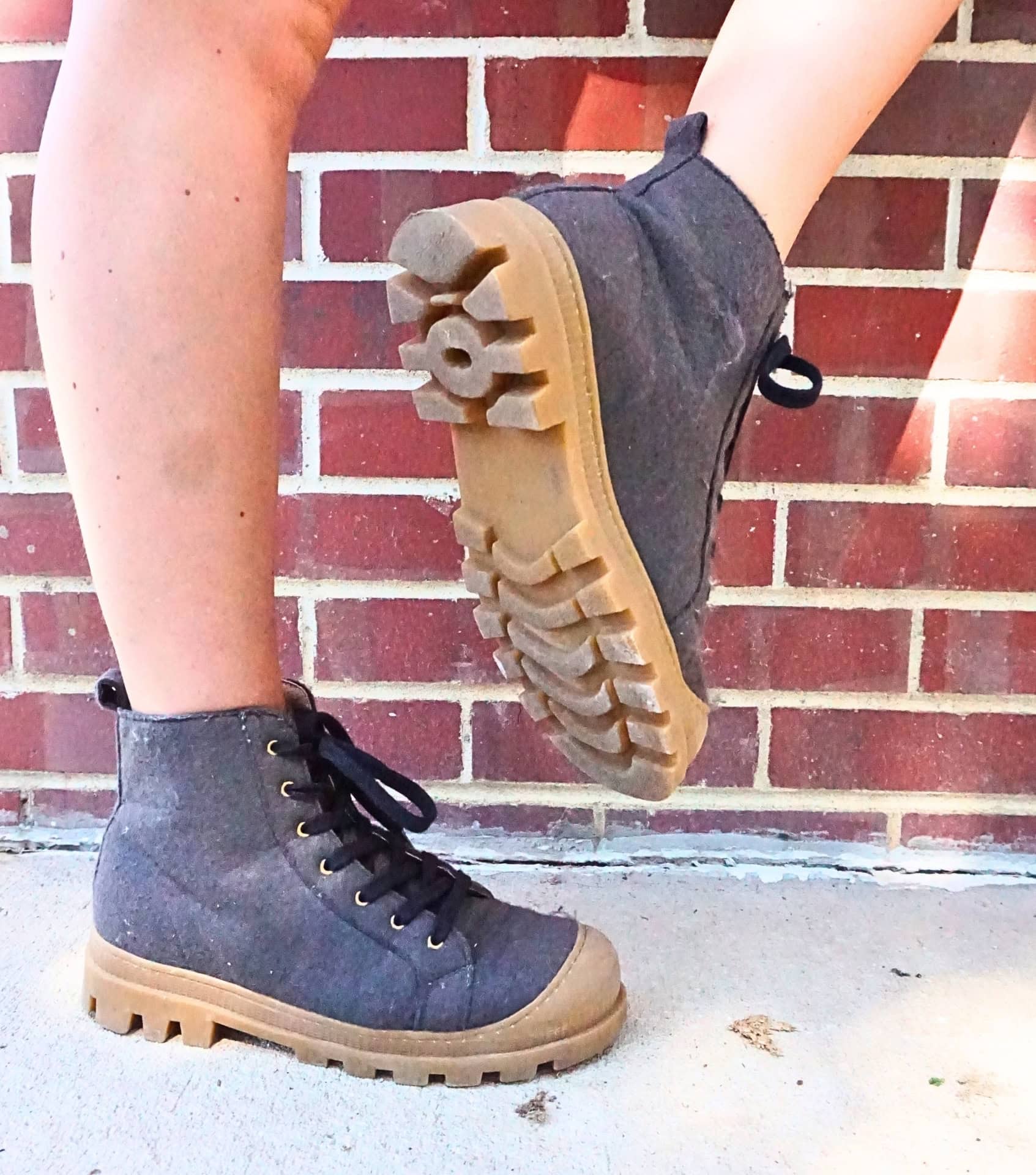
They carry extensive options in all manner of vegan shoes for both men and women, we well as unisex options so you can vibe any which way you feel. Follow our example and try the High-Top Lace-Up Sneaker Boot. Made of a recycled PET fabric upper and lightweight, non-slip thermoplastic rubber outsole, we love these comfortable and versatile boots when we know we’re going to be on our feet all day.
With many options teetering close to $100, they’re accessibly affordable, too,
NAE’s Ethical & Sustainability Practices
Materials:
NAE’s sustainable materials for boots (some of which bear OEKO-TEX certification) range from common (recycled PET and partially-recycled vegan leather) to innovative (Bioeco made from fermented corn starch and recycled polyester).
Other styles feature cork, organic cotton, Piñatex (made from pineapple leaf fibers), and AppleSkin leather (a byproduct from the apple juice industry). While there are a few instances of synthetic microfibers, they are limited.
Supply chain & labor practices:
NAE works with four certified factories, two of which are in the north of Portugal and another two in Spain.
Carbon commitments & green practices:
Whether you snag some sustainable Chelsea boots or any other style, know that manufacturing is always carbon neutral and employs other resource-minimizing techniques.
Christy Dawn
About Christy Dawn
Price Range: $358–$388
Slow fashion icon Christy Dawn is all about honoring Mother Earth through a spiritual and sustainable connection, believing what we wear should be circular and created with environmental intention.
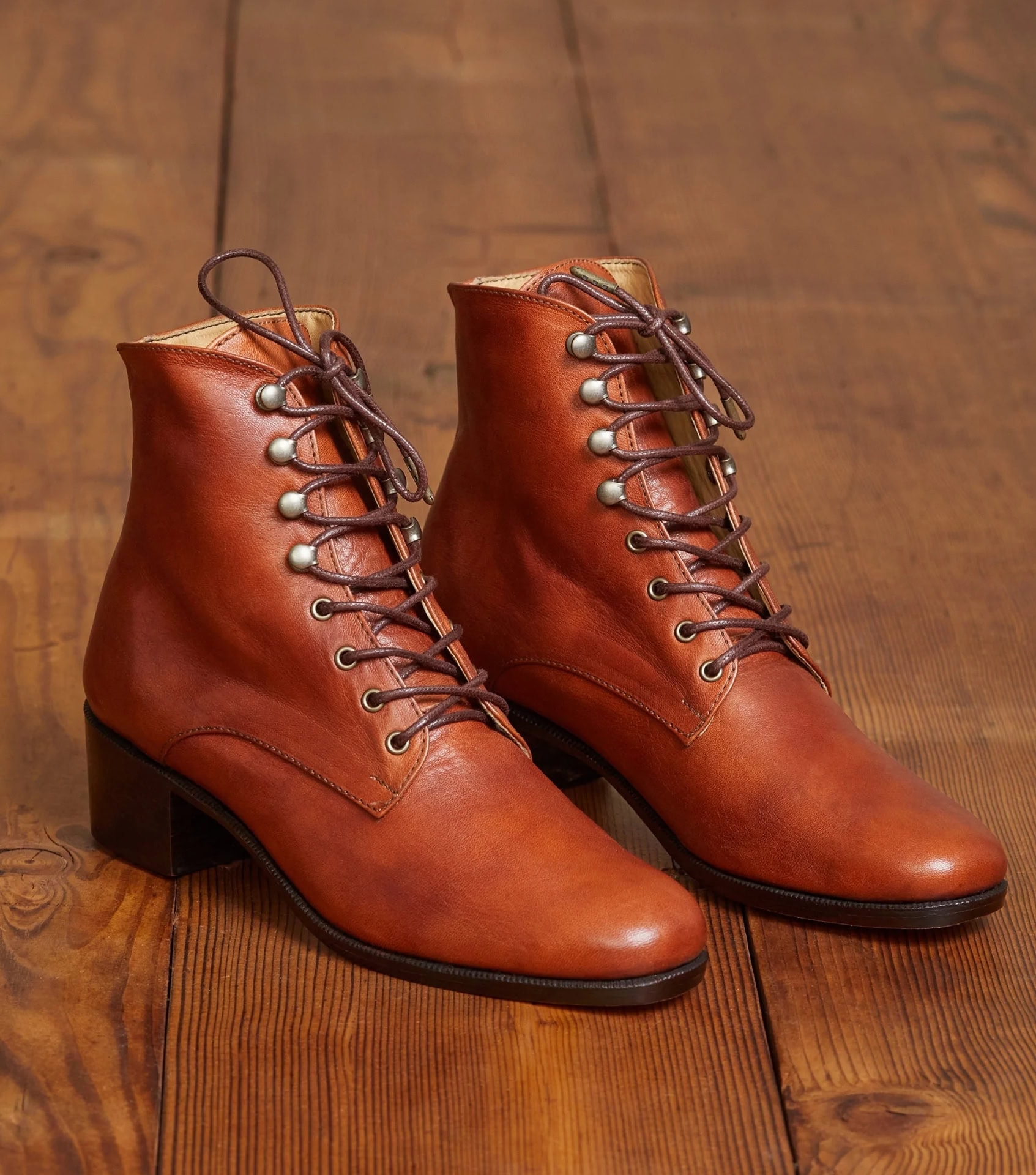
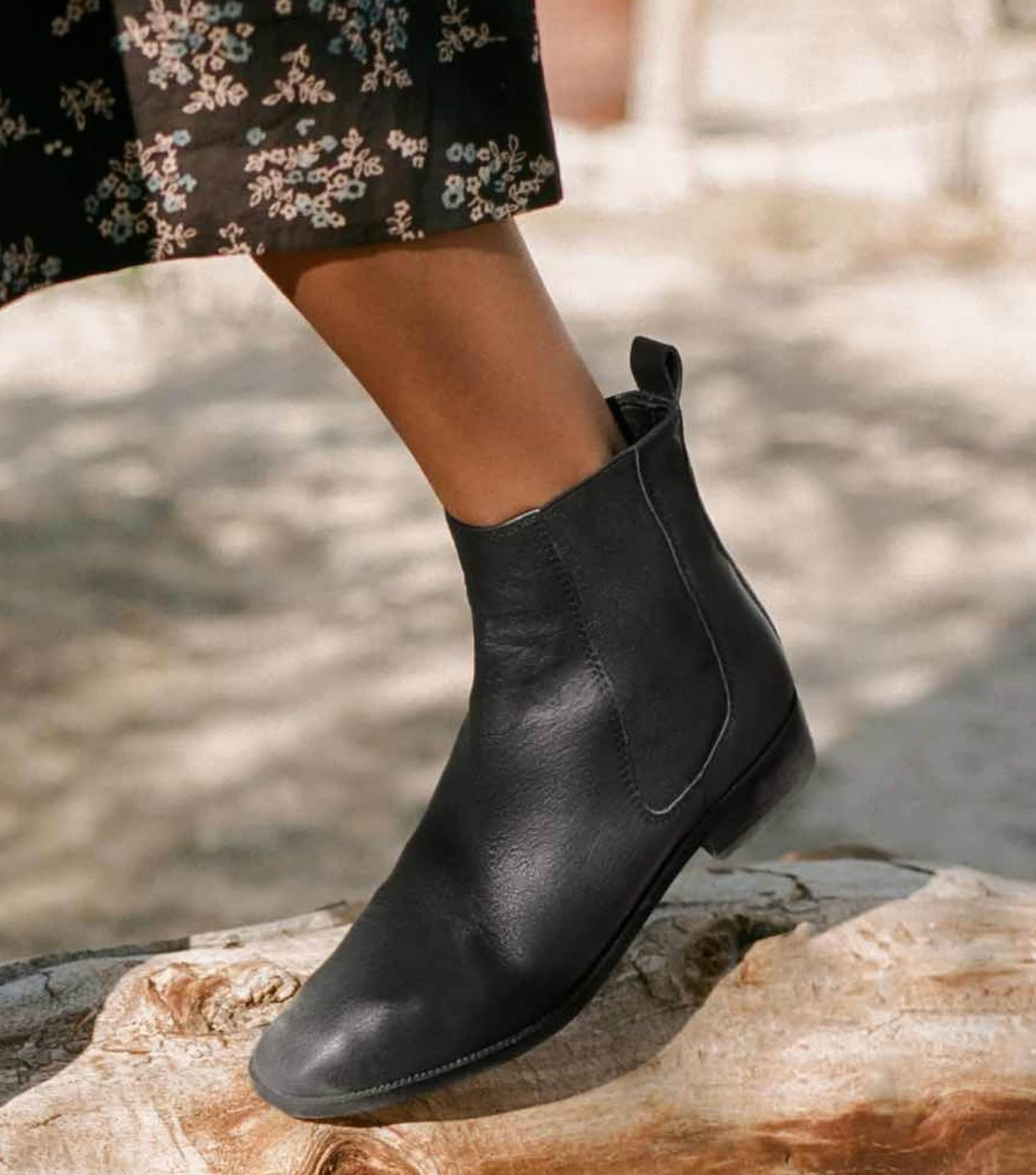
Their upcycled vintage-inspired clothing range includes dresses, tops, bottoms, loungewear, and footwear—including sandals and sustainable leather boots, like the knee-high Yoko Boots, a modern cowboy boot with a gorgeous, handcrafted natural patina.
Christy Dawn’s Ethical & Sustainability Practices
Materials:
Their footwear is created from untreated, naturally textured, upcycled deadstock leather (outsole included).
Supply chain & labor practices:
All Christy Dawn products—from dressed-up boots to dressed-down sustainable loungewear—are produced in Los Angeles. Not only are these ethical boots made in the USA, but sourced there too, considering all deadstock fabrics come from textile companies based in L.A.
Carbon commitments & green practices:
Their Farm-to-Closet Initiative includes a partnership with Oshadi, leasing 50 acres of land to turn it into a regenerative cotton farm. You can help grow their mission and buy your own regenerative plot of land and receive its annual yield in the form of a shop gift card.
Community & charitable giving:
They provide the option to buy a plot through their Land Stewardship Investment program, which contributes to the farmers’ salary, seeds, fertilizer, and more, helping you get from soil to dress.
Bhava

About Bhava
Price Range: $125–$345
Whether you’re traversing the beach or galavanting around the streets of New York City, Bhava can match your lifestyle step-for-step. They’re strictly cruelty-free and vegan across all manner of footwear, including ethical boots with an innovative kick.
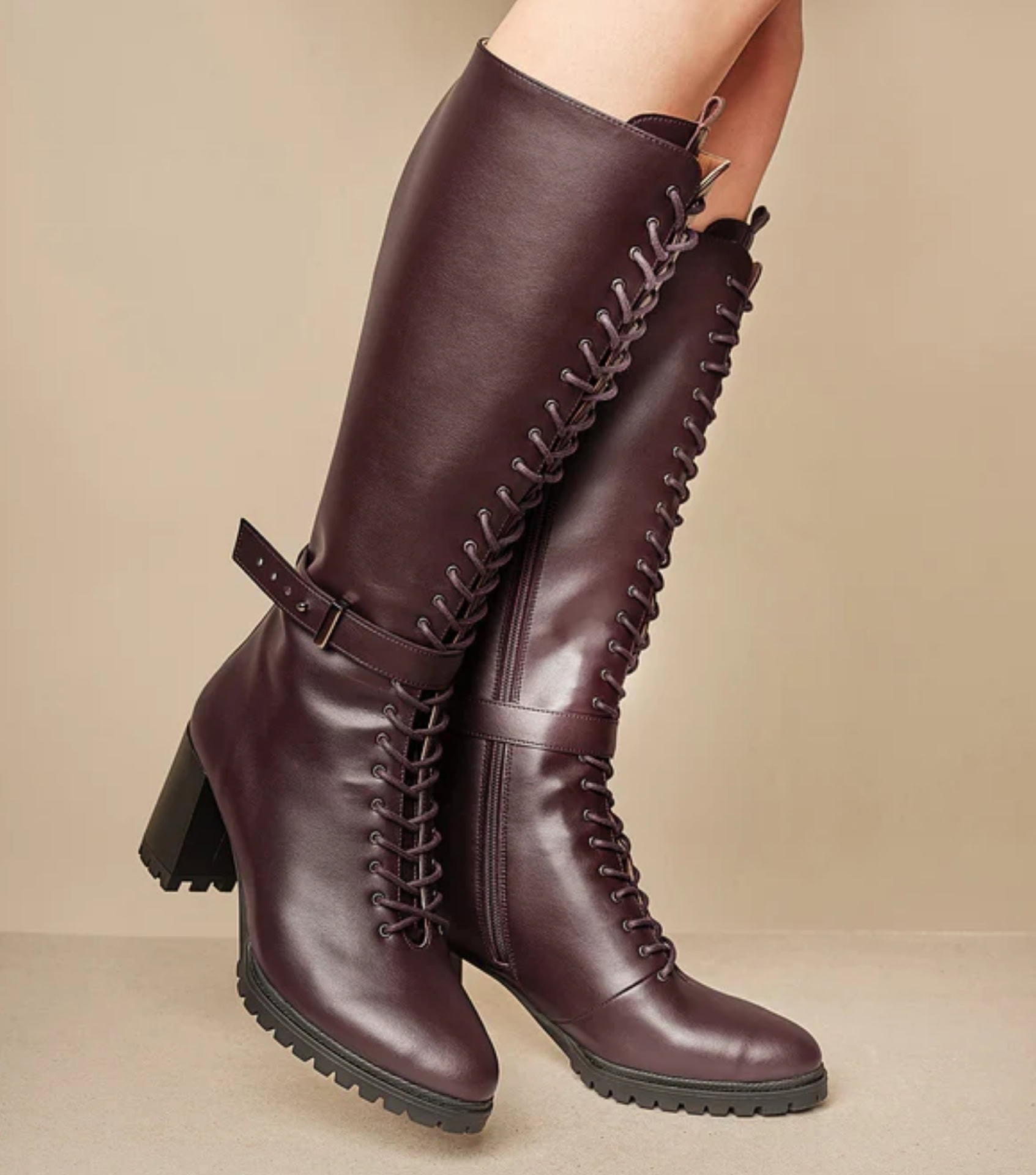
In addition to regular sustainable knee-high boots, they all sell boot uppers that allow you to convert any of their ankle-high booties into full-length boots. With a dark vegan leather upper and wooden platform sole and heel, the Claudia Platform Ankle Boot is 60s go-go boot meets earthy modern tree hugger.
Bhava’s Ethical & Sustainability Practices
Materials:
Across their range of ethical heels, sandals, clogs, and eco boots, Bhava’s uppers consist of vegan leather. We’re not sure what exact material it is, but we know it’s not PVC or PCP. It’s also REACH-compliant and free of formaldehyde, phthalates, azo dyes, and chrome.
That’s paired with natural rubber soles, eco-suede linings, cork insoles, and some heels made with wood.
Supply chain & labor practices:
Products are handmade by one of two main manufacturing partners in Spain and India (at the country’s first 100% female-owned footwear factory).
Factories are personally vetted for safe working conditions, but beyond this knowledge, there is limited information on their standards, supply chain, or certifications, so we will be following up.

Heather earned a Bachelor of Science in Human Nutrition from the The Ohio State University before completing a Masters in Environment at The University of Melbourne. She then went on to achieve a Permaculture Design Certificate at the Djanbung Gardens. Heather feels best when she is barefoot in a forest or has dirt under her fingernails. She’s constantly daydreaming about her homesteading future and has a rapidly-growing list of the best local (and not-so-local) hiking trails. When she’s not busy hoarding an embarrassing number of upcycled glass jars, experimenting with urban composting, or quelling her eco-anxiety on a long run, Heather spends her 9-5 working for a sustainable agriculture nonprofit, where she advocates for state and federal policies that support thriving farmers and a habitable future.