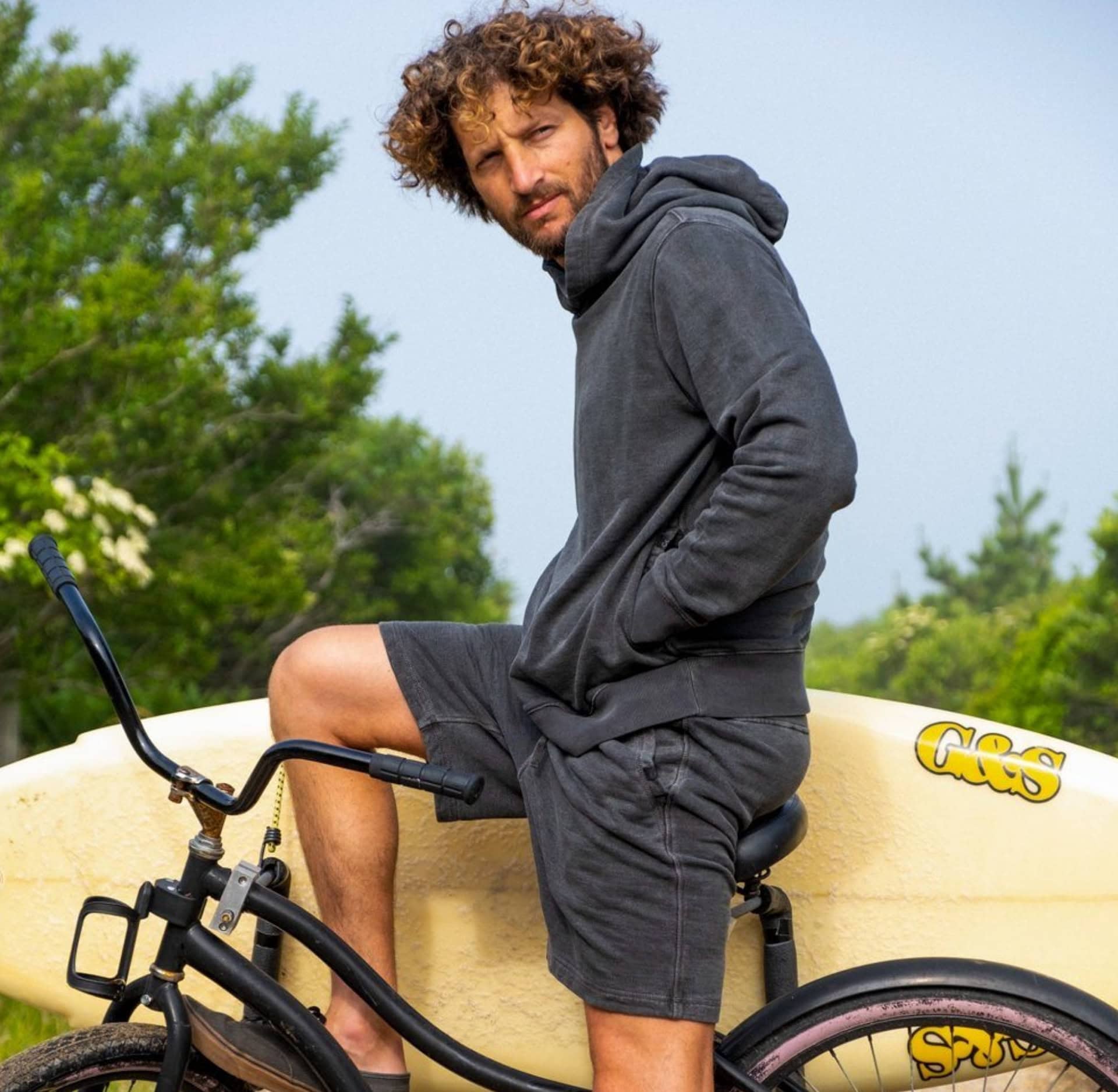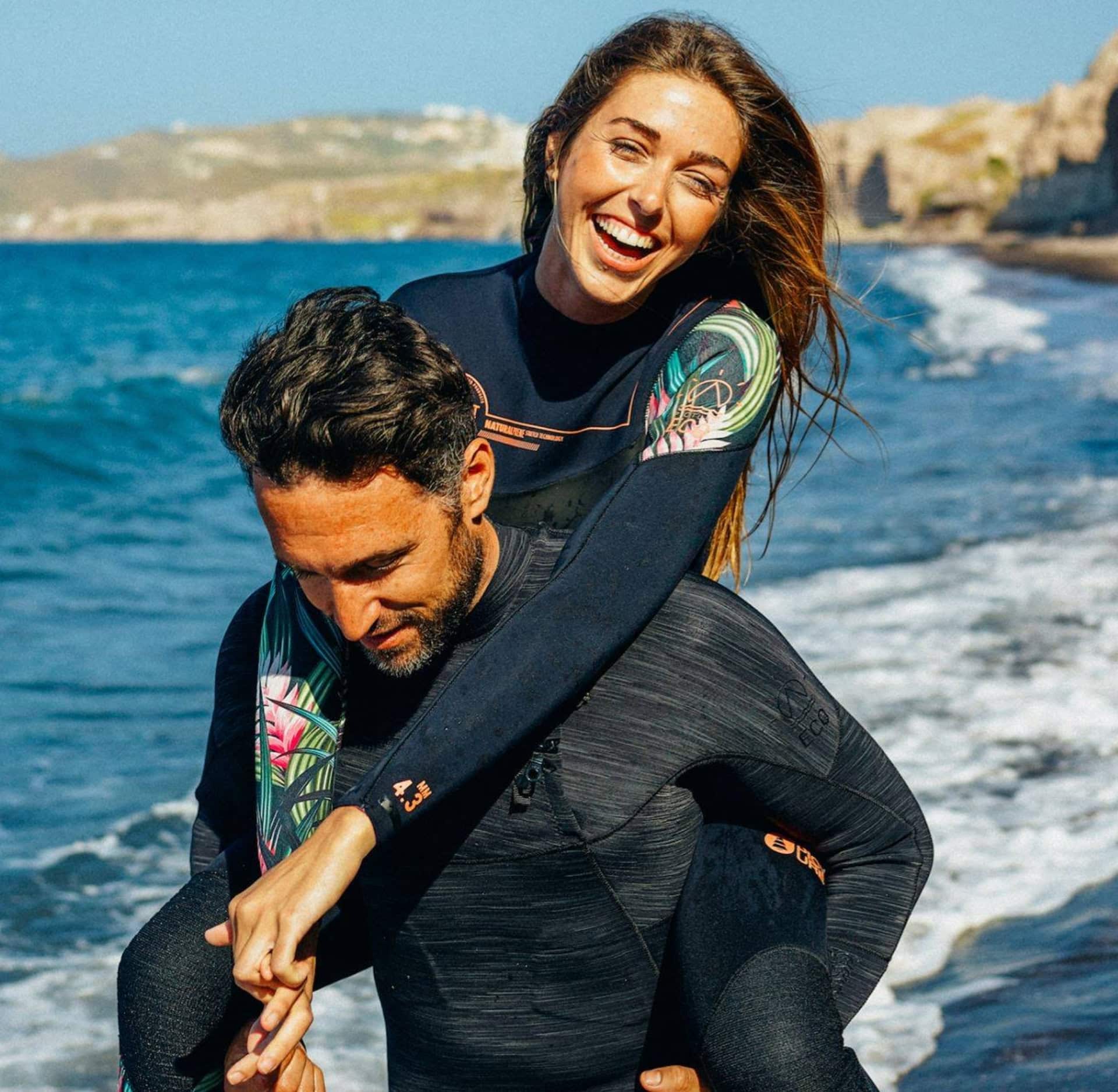
Surf’s up! We love a good wipe-out, but not when it’s also wiping out the planet, so it’s time to grab your eco-friendly wetsuits and hit the waves.
Traditional wetsuits are made from neoprene (AKA petroleum), making them non-renewable and harmful to humans, animals, and (yes) the oceans they help us experience.
Fortunately, neoprene-free wetsuits—like those made from limestone, recycled tires, or natural wetsuit rubber—forego harmful production methods, emit fewer carbon emissions and use less water and resources. With these sustainable wetsuits, you can spend less time stressing and more time shredding.
And with our Brand Rating System that we’ll be rolling out like waves in coming months, we’ll be looking over these brands across 22 criteria, like climate action and product reviews to ensure the brands we’re recommending are truly swell for everyone. Learn about our updated methodology here.
We independently research all featured brands and we ask them to confirm their claims. In many cases we personally review recommended products. This post contains affiliate links which means we may earn a commission if you buy something. Learn more here.
Catch A Wave In The Top Totally Tubular Sustainable Wetsuits
Like all of Patagonia’s outdoor wear, their Yulex® wetsuits are as high-quality as those offshore wind conditions. Better yet, they’re made from natural rubber that is renewable, FSC-certified, and emits fewer carbon emissions.
We’re stoked on Certified B Corp Picture Organic, who produces eco wetsuits from limestone neoprene, making it a fantastic alternative to traditional options.
Index: Natural Or Recycled Wetsuit Brands
- Patagonia Jump to brand
- Picture Organic Jump to brand
- Billabong Jump to brand
- Vissla Jump to brand
- Xcel Wetsuits Jump to brand
- ROXY Jump to brand
- Quiksilver Jump to brand
Patagonia
About Patagonia
Price Range: $65–$639
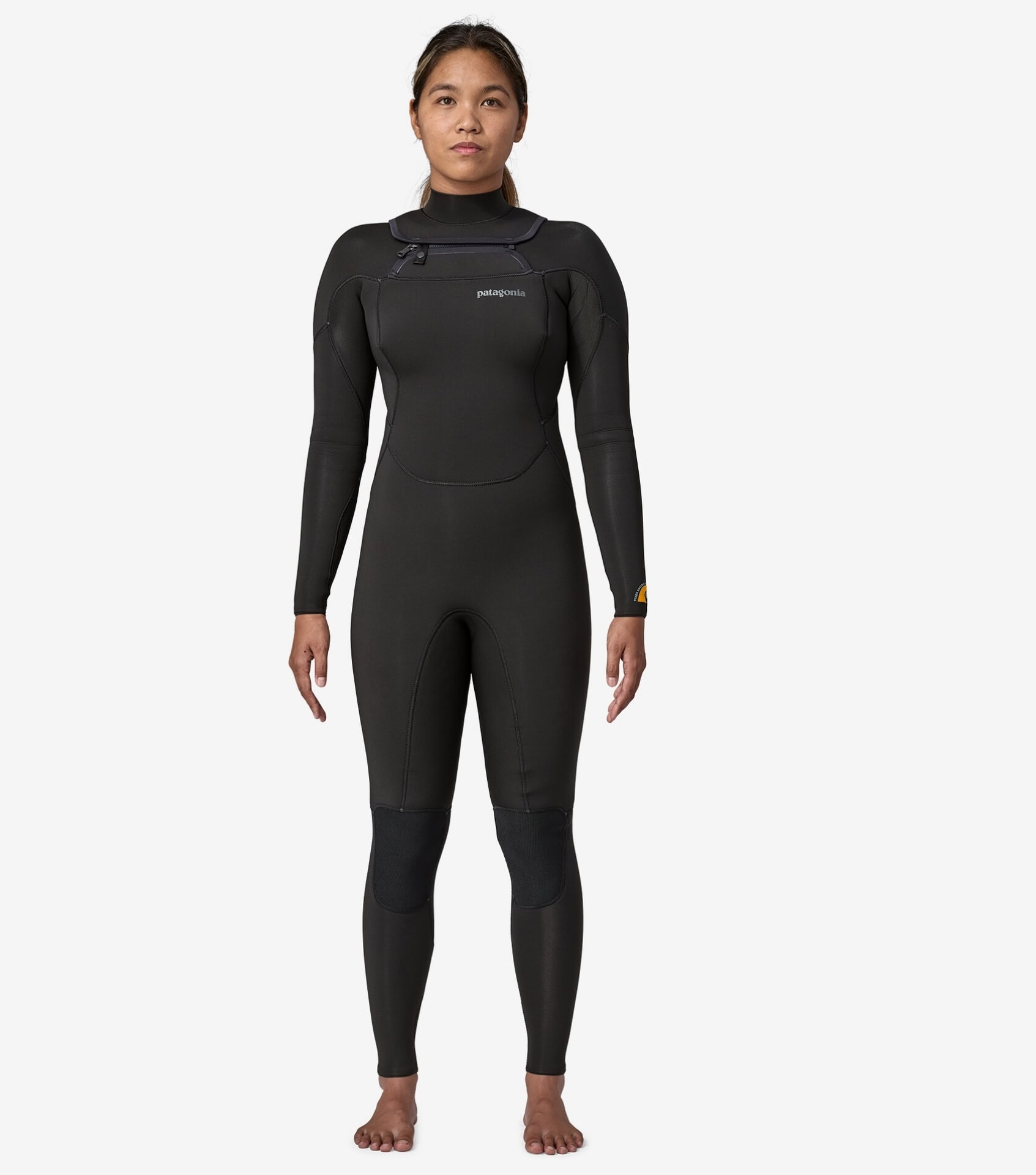
Patagonia is known and loved across the seven seas for its catalog of sustainable outdoor clothing made from natural and recycled materials—and their eco wetsuits are no exception.
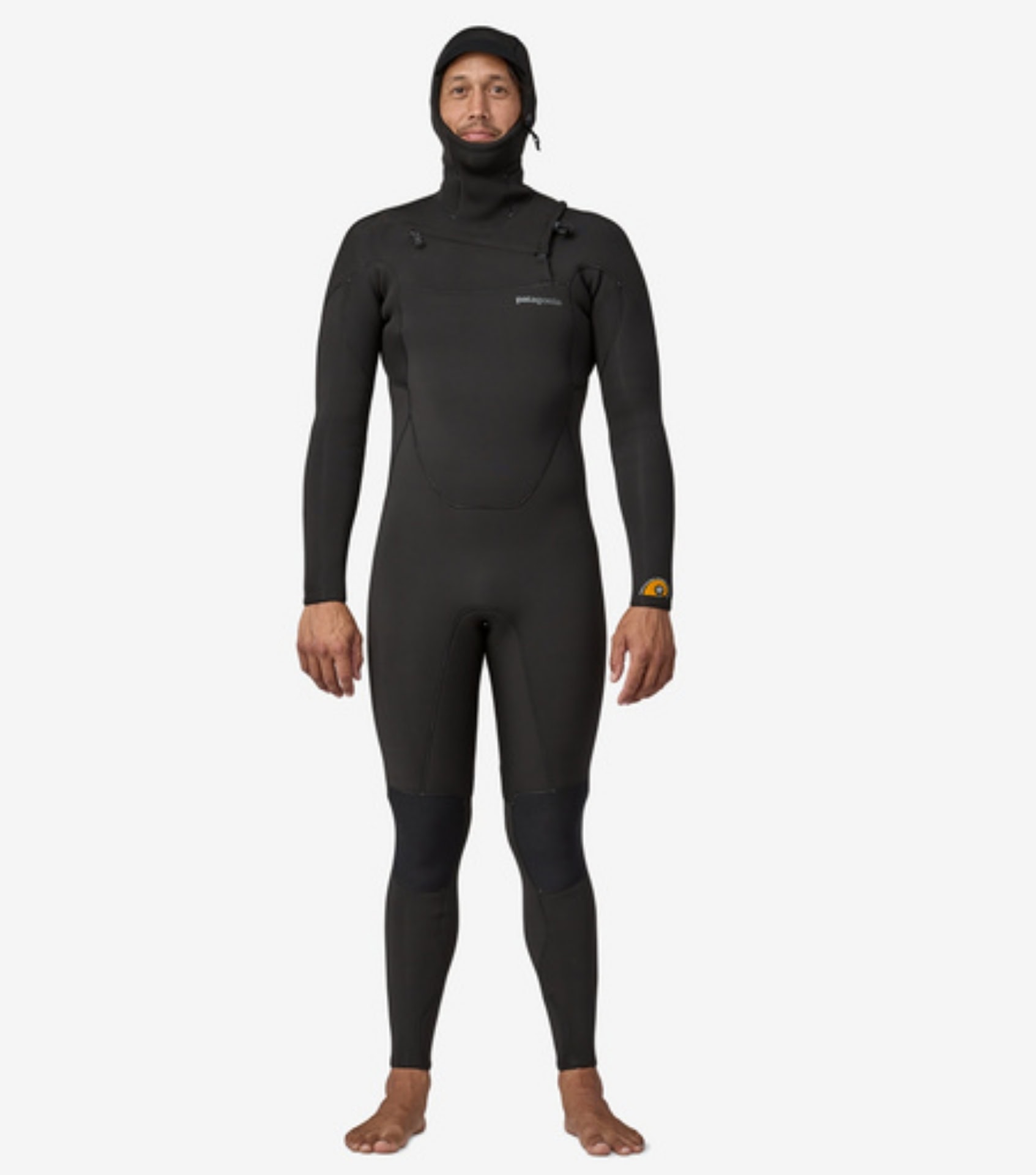
They went above and beyond, developing the first neoprene-free wetsuit in 2012. Their extensive lineup includes mostly Yulex® rubber options, like the full-body R3® Regulator. With a detachable hood, it’s perfect for play in COLD water.
Patagonia’s Ethical & Sustainability Practices
Materials:
Patagonia’s neoprene-free wetsuits are made out of Yulex® biorubber. The material combines 85% Yulex® natural rubber and 15% synthetic rubber, which come from FSC and Rainforest Alliance-certified sources. Comparing Yulex® vs neoprene, Yulex® natural rubber wetsuits are equally robust, but have a far lower carbon footprint, due to the fact that no petroleum is involved.
Patagonia also uses AquaA™ Glue, an eco-friendly glue for neoprene alternatives that don’t contain harmful chemicals or VOCs.
If you need some board shorts for a post-surf beach hang, they also offer sustainable men’s swimwear made of recycled synthetics.
Supply chain & labor practices:
Compared to conventional wetsuit manufacturers, Patagonia provides transparency through The Footprint Chronicles, which details what factory produces each item.
As a Fair Trade brand and Certified B Corp, Patagonia’s manufacturing partners adhere to fair labor laws and regular audits. Each of the environmentally friendly wetsuits is produced in Fair Trade factories.
Carbon commitments & green practices:
Besides developing eco-friendly neoprene alternatives, Patagonia goes above and beyond in the way of low impact fabrics. 91% of their fabrics by weight are now considered “preferred materials”. They utilize an efficient manufacturing process and solution dyes, leading to a much lower carbon footprint and water consumption.
Patagonia has an extensive repair and warranty agreement for its products, and you can snag pre-loved Patagonia Yulex® wetsuits via their Worn Wear, as well as trade in any unwanted ones. It’s one of the few options for recycling wetsuits currently available.
Inclusivity:
Men’s Yulex® natural rubber wetsuits run XS–XXL; women’s Yulex® wetsuit sizes run 4–12.
Community & charitable giving:
Patagonia co-founded 1% for the Planet, holding countless brands (ourselves included!) accountable for their commitment to contribute to environmental causes.
Furthermore, Patagonia founder Yvon Chouinard recently restructured company stocks so that “Earth is now our only shareholder”. Profits are now either reinvested in Patagonia’s sustainability improvements or put toward fighting the climate crisis directly.
Picture Organic
About Picture Organic
Price Range: $49–$439
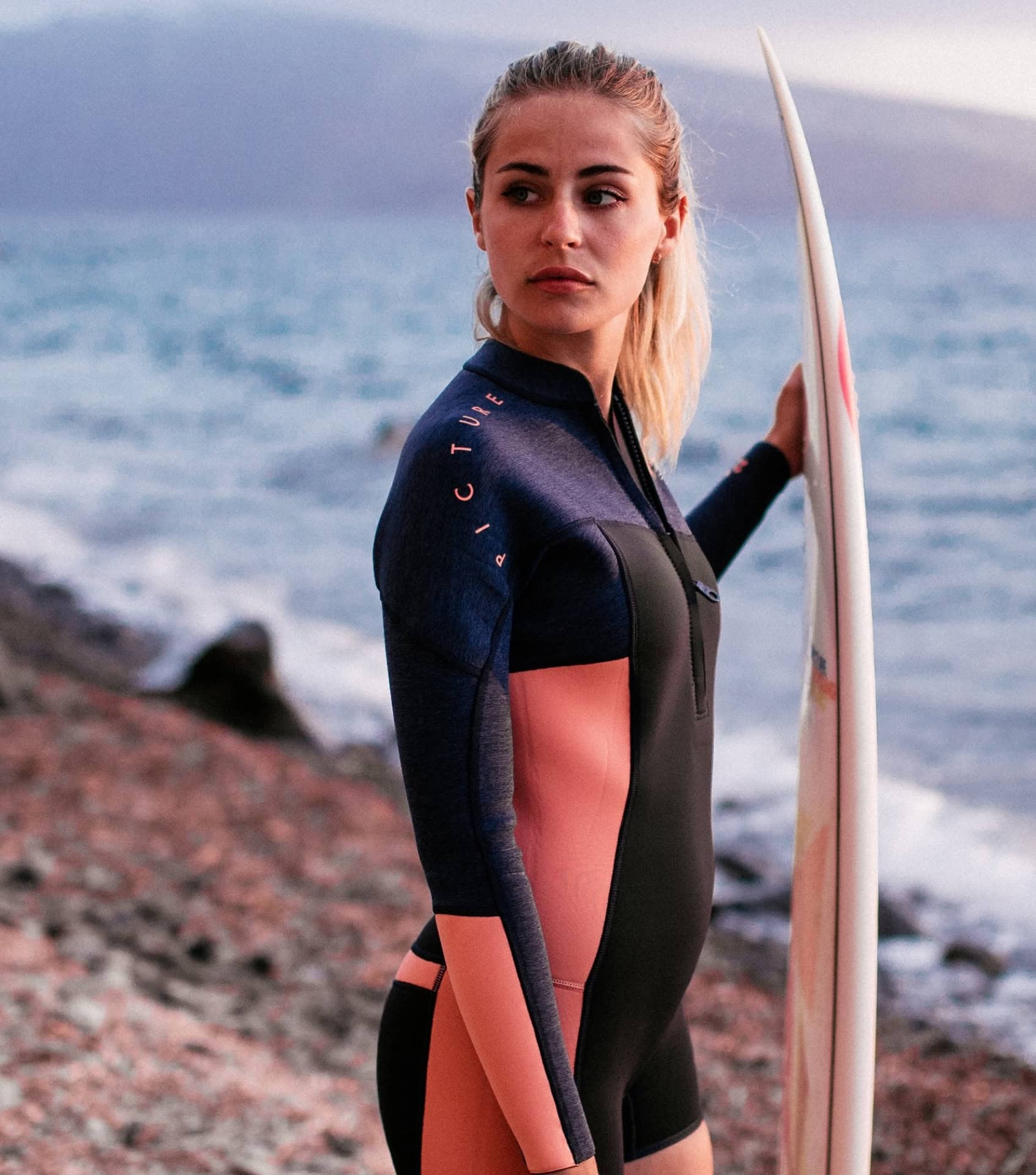
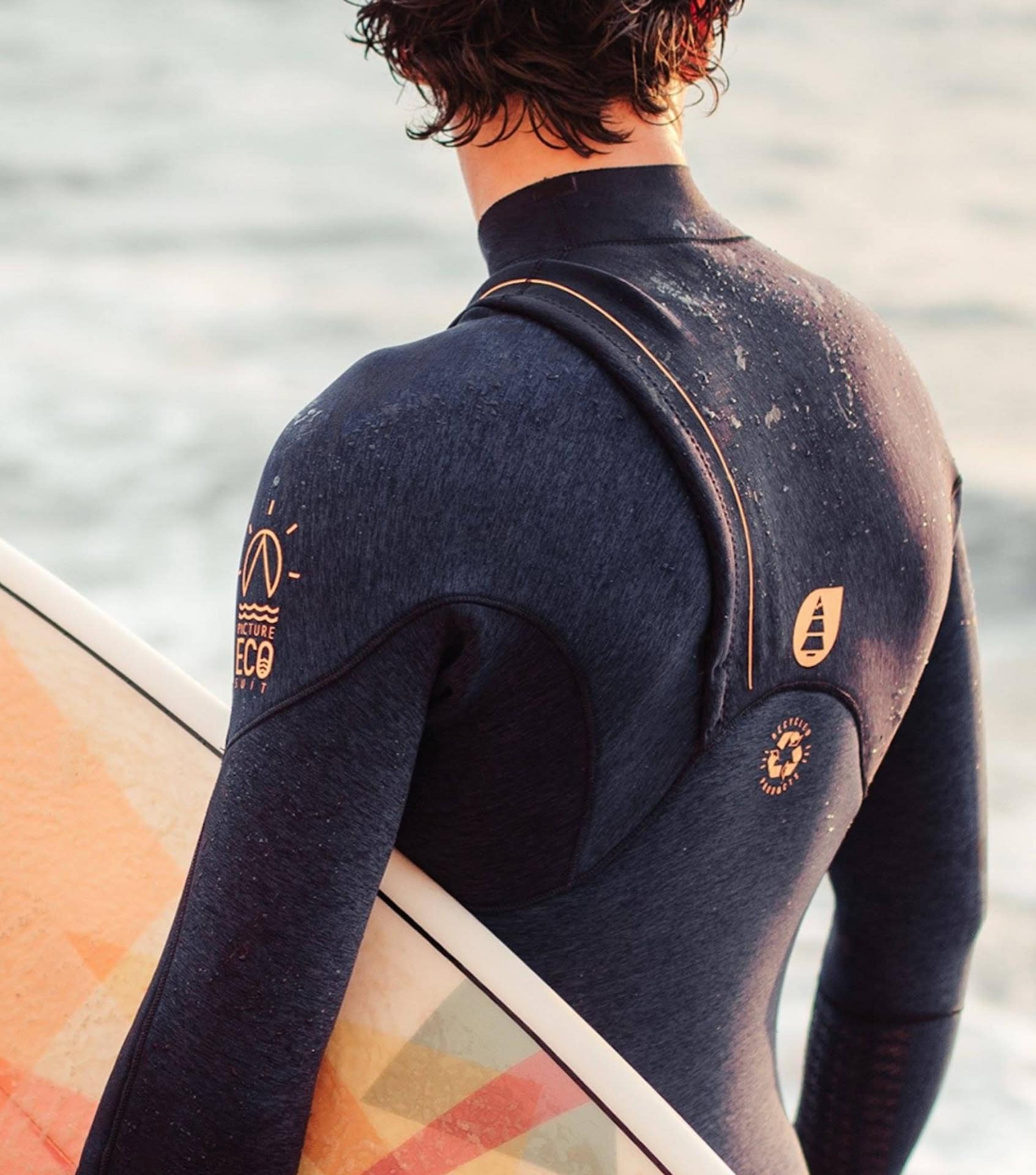
Picture Organic sees the big picture regarding sustainable neoprene wetsuits made with EcoPrene, a petroleum-free neoprene alternative made from limestone and recycled materials. Options like the Dome Front Zip Wetsuit are ideal for cold water surfing, with a thick watertight seal, durable construction, and safety features like knee pads.
Picture is based in France, providing a closer option for those seeking sustainable wetsuits in the UK.
Picture Organic’s Ethical & Sustainability Practices
Materials:
Picture Organic develops environmentally-friendly wetsuits primarily out of limestone neoprene and recycled tires. This “EcoPrene” contains no virgin petroleum, but most of the eco-friendly wetsuits also contain components made of recycled polyester and recycled nylon.
Supply chain & labor practices:
Picture Organic works with 22 global factories, but over 84% of its products are made in two factories in Dongguan, China, and Izmir, Turkey. As a member of the Fair Wear Foundation, all factories are audited to ensure fair employee treatment, wages, and conditions.
Carbon commitments & green practices:
This Certified B Corp tracks and measures all of its carbon emissions. What’s more, they’ve taken action to reduce their carbon footprint, like using solar panels and low-energy manufacturing techniques.
Aiming to reduce shipping and packaging waste, customers can select Repack, a reusable and returnable packaging service.
Inclusivity:
Women’s eco-friendly wetsuits are available in sizes XS–M and 6–12 and men’s XS–XXL and 29”–36”.
Community & charitable giving:
Picture Organic regularly donates to and works with countless organizations, like Protect Our Winters and The Fashion Revolution, helping end human and environmental exploitation in the fashion industry.
Billabong
About Billabong
Price Range: $89–$439
Billabong has been around for 50 years, and with all that skin in the game comes some of the most eco-friendly wetsuits. Sure, the surf brand wasn’t always sustainably-focused, but they’re proof positive that any brand can become better.
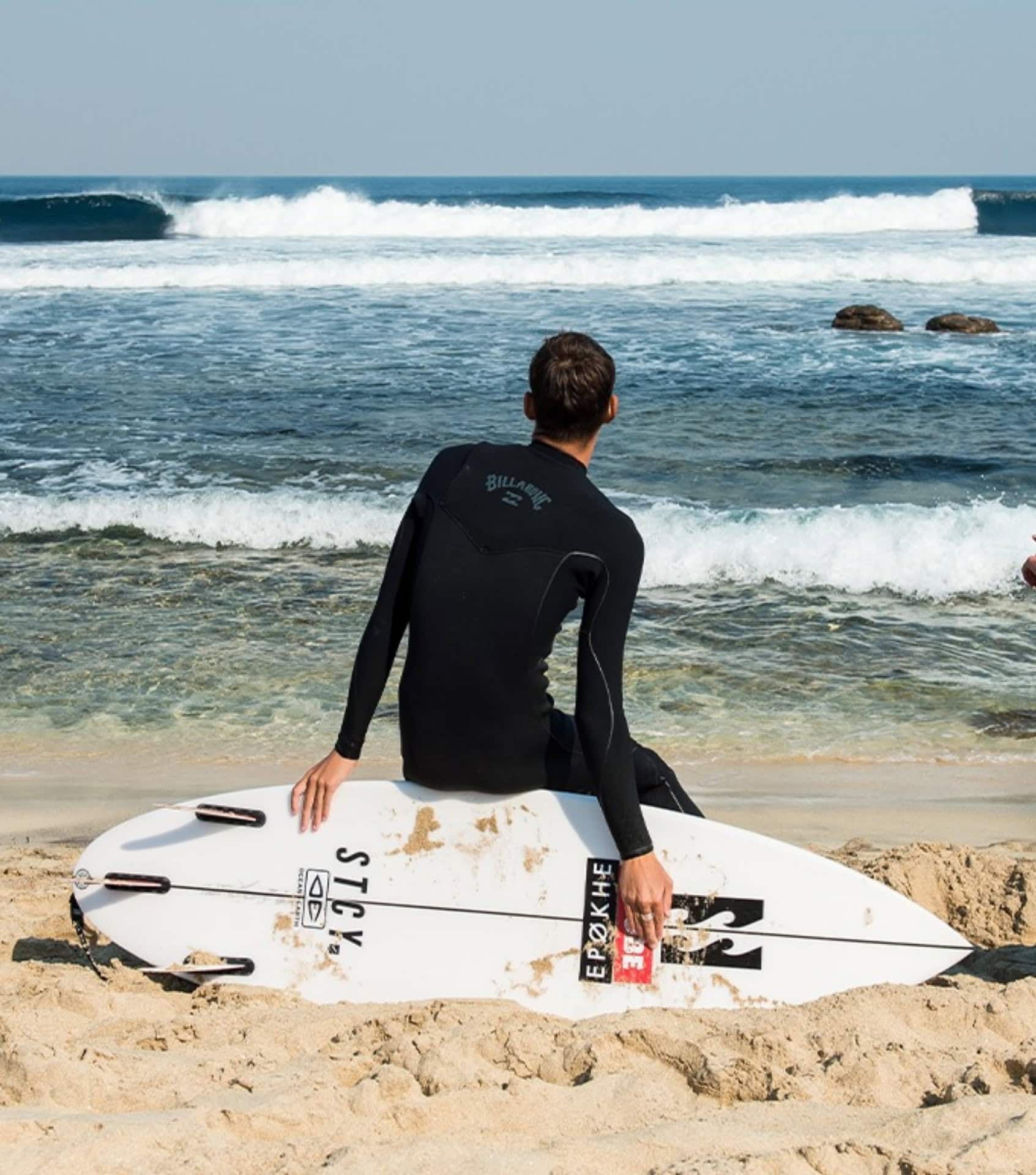
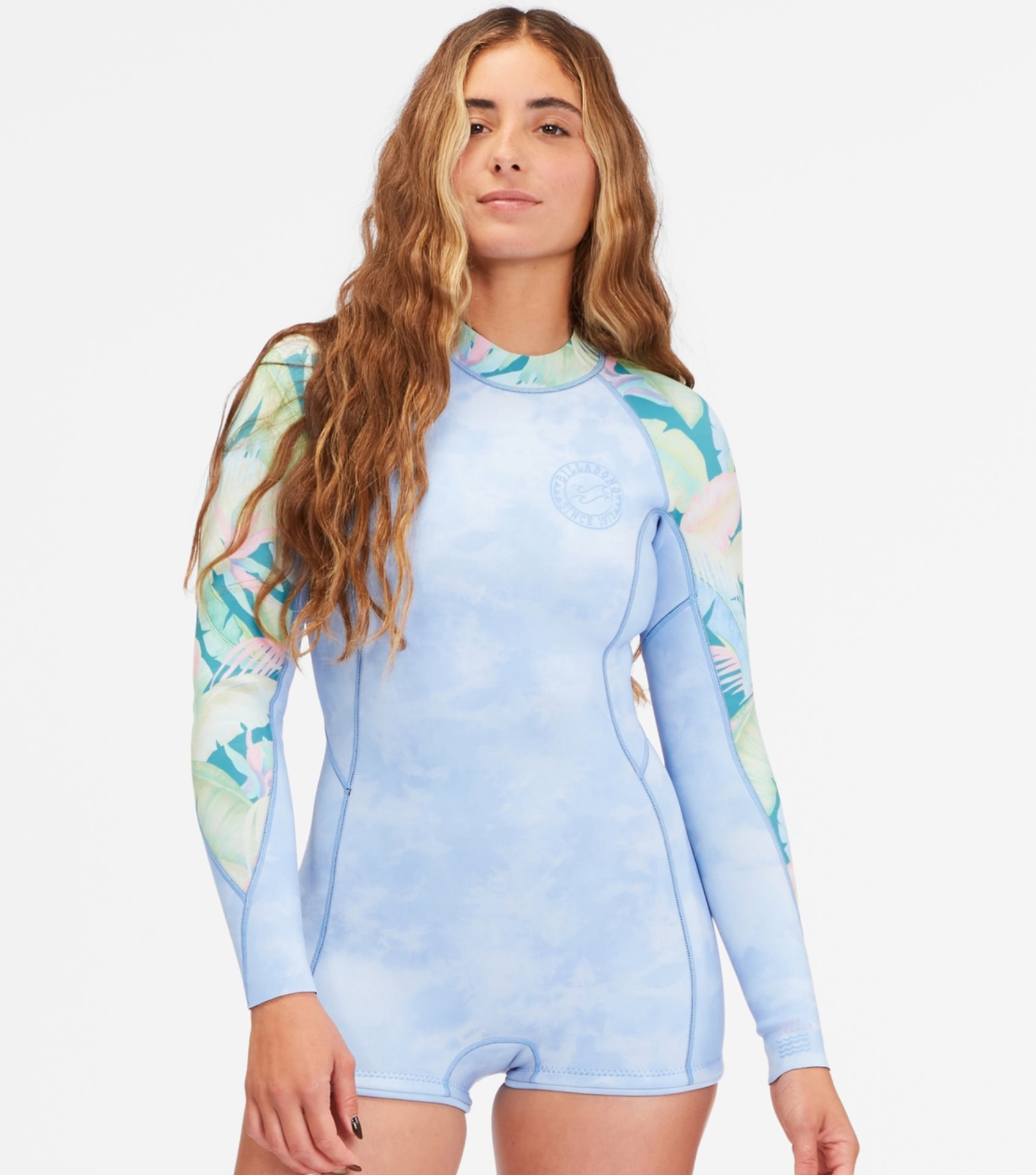
Now, 100% of Billabong’s snow and water-wear are made using mostly recycled or sustainable materials. This includes board shorts, bikinis, rash guards, and recycled neoprene wetsuits. Hybrid wetsuits like the Spring Fever Long-Sleeve provide a warm layer for spring surfing that remains light and maneuverable.
Billabong’s Ethical & Sustainability Practices
Materials:
Billabong’s main recycled wetsuit material is recycled neoprene blended with a little bit of virgin nylon. Other options pair recycled PET liners with water-based glues and foam from upcycled scrap rubber tires.
Supply chain & labor practices:
Under the same parent company as Quiksilver (Boardriders Inc.), Billabong adheres to the Quiksilver Ethical Standards of Trade. This includes a Supplier Workplace Code of Conduct, preventing abusive, exploitative, or illegal conditions in the workplace, and preventing human trafficking and slavery.
Carbon commitments & green practices:
At Billabong Headquarters, they provide polybag recycling, compost bins, EV charging stations, refillable water stations, and zero plastic utensils. All packaging is also recycled and fully recyclable.
Thanks to their Recycler program, they have diverted over 200 million plastic bottles from ending up in landfills and oceans and repurposed them into products.
Inclusivity:
Men’s wetsuits are available in sizes S–XXL, and women’s come in sizes 2–16.
Community & charitable giving:
Billabong has been around for ages, supporting organizations like the befitting Surfrider Foundation, Sea + Soil, and SeaTrees.
Vissla
About Vissla
Price Range: $29–$359
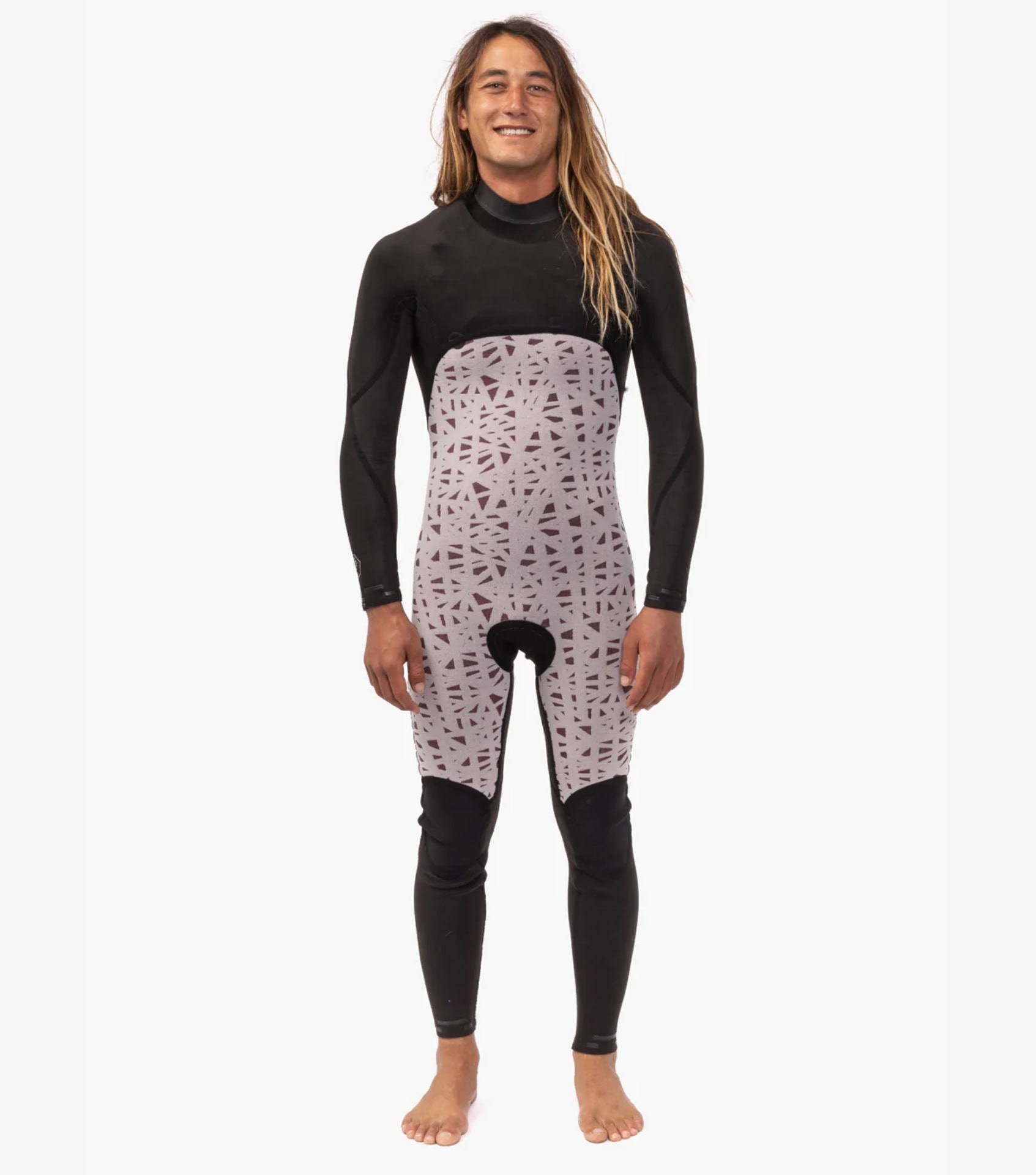
Vissla has a clear goal: “To protect and surf.” They achieve this through a vast catalog of board shorts, fleece, jackets, tees, bottoms, and, of course, wetsuits.
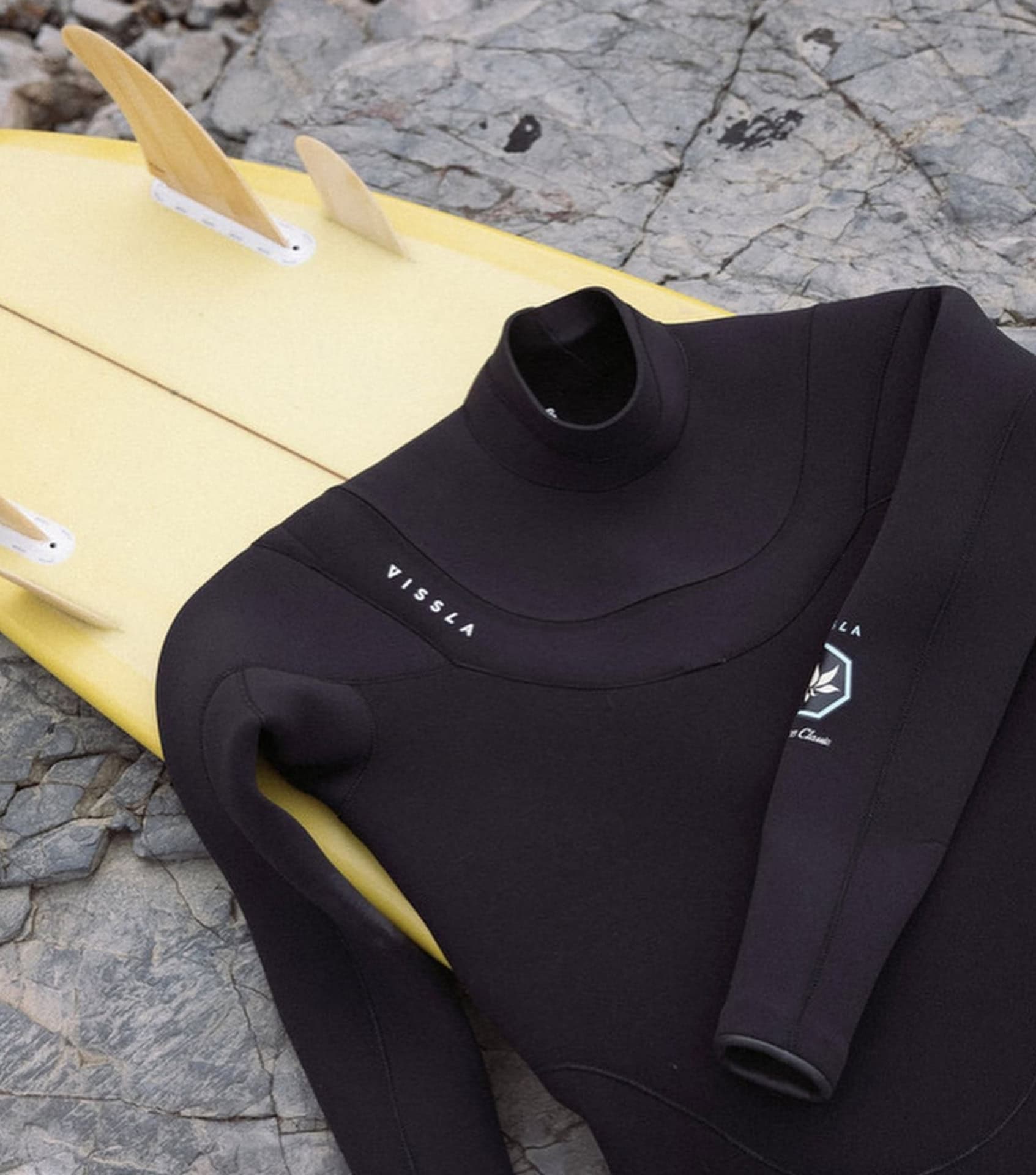
Not everything is sustainable yet, but they’re working on it, with 55% of the catalog currently made from recycled, upcycled, or sustainable materials. For those, Vissla utilizes limestone neoprene for options like the 7 Seas Full Chest Zip Wetsuit. This design provides enough stretch to keep you comfortable while locking in heat for cold-weather surfing.
Vissla’s Ethical & Sustainability Practices
Materials:
Vissla produces eco-friendly dive wetsuits from Japanese limestone neoprene and recycled tires. Some are knitted with additional recycled fibers. The black interior, exterior jersey material, and tape are dyed via dope-dyed yarns.
The glue is water-based, which reduces harmful chemicals in waterways and the environment.
Supply chain & labor practices:
Vissla’s fabric mills have received the bluesign®-approved System Partner certification, ensuring responsible chemical, energy, and water usage.
Carbon commitments & green practices:
Vissla partners with VELA to incorporate curbside recyclable paper-based packaging made from 100% FSC-certified paper.
Inclusivity:
These limestone wetsuits come in sizes S–XL, including in between sizes like medium-tall and large-short.
Community & charitable giving:
Vissla works with various brands and organizations, like Surfrider Foundation and the Surf Industry Members Association (SIMA) Environmental Fund.
Xcel Wetsuits
About XCEL
Price Range: $164–$629
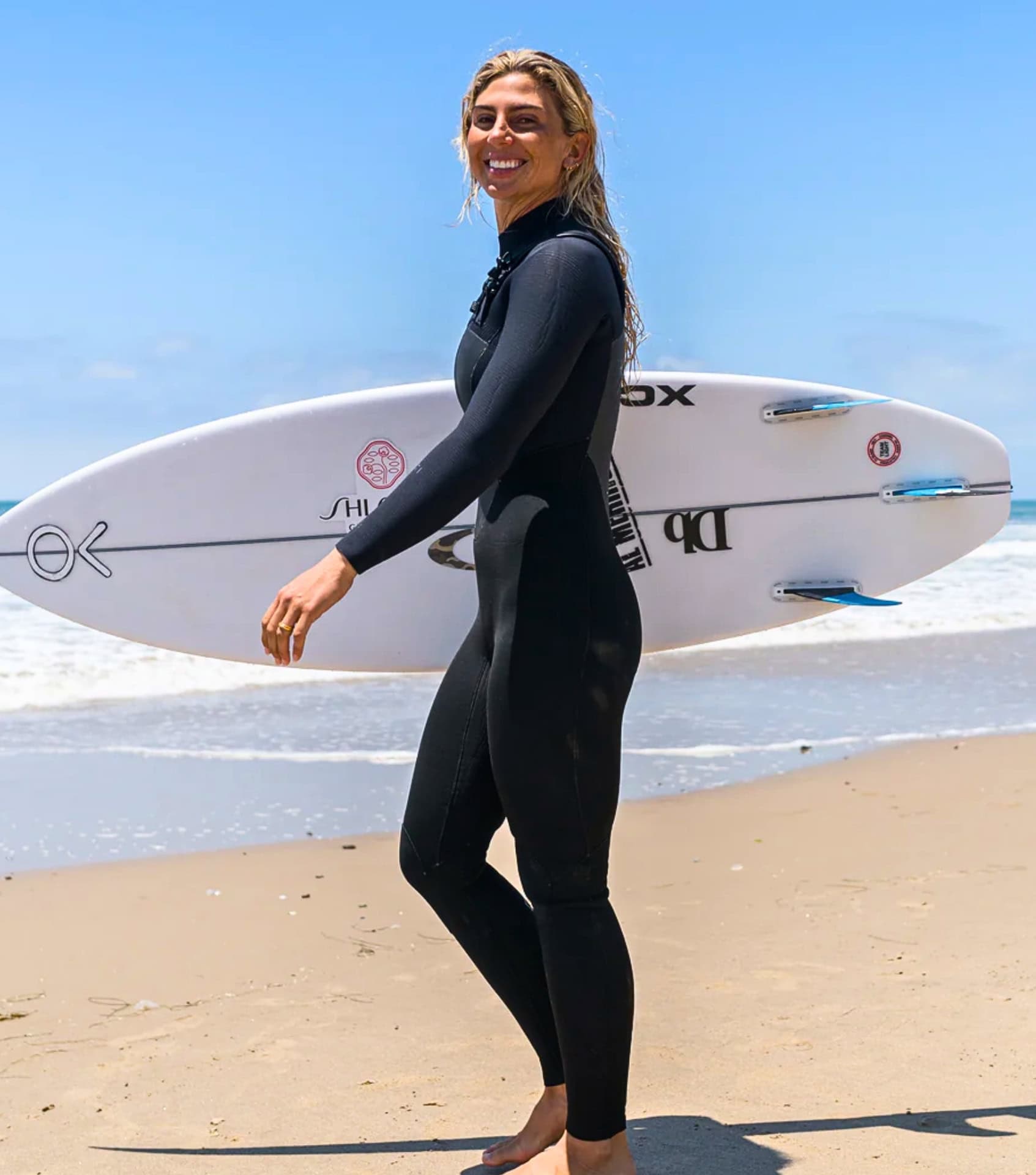
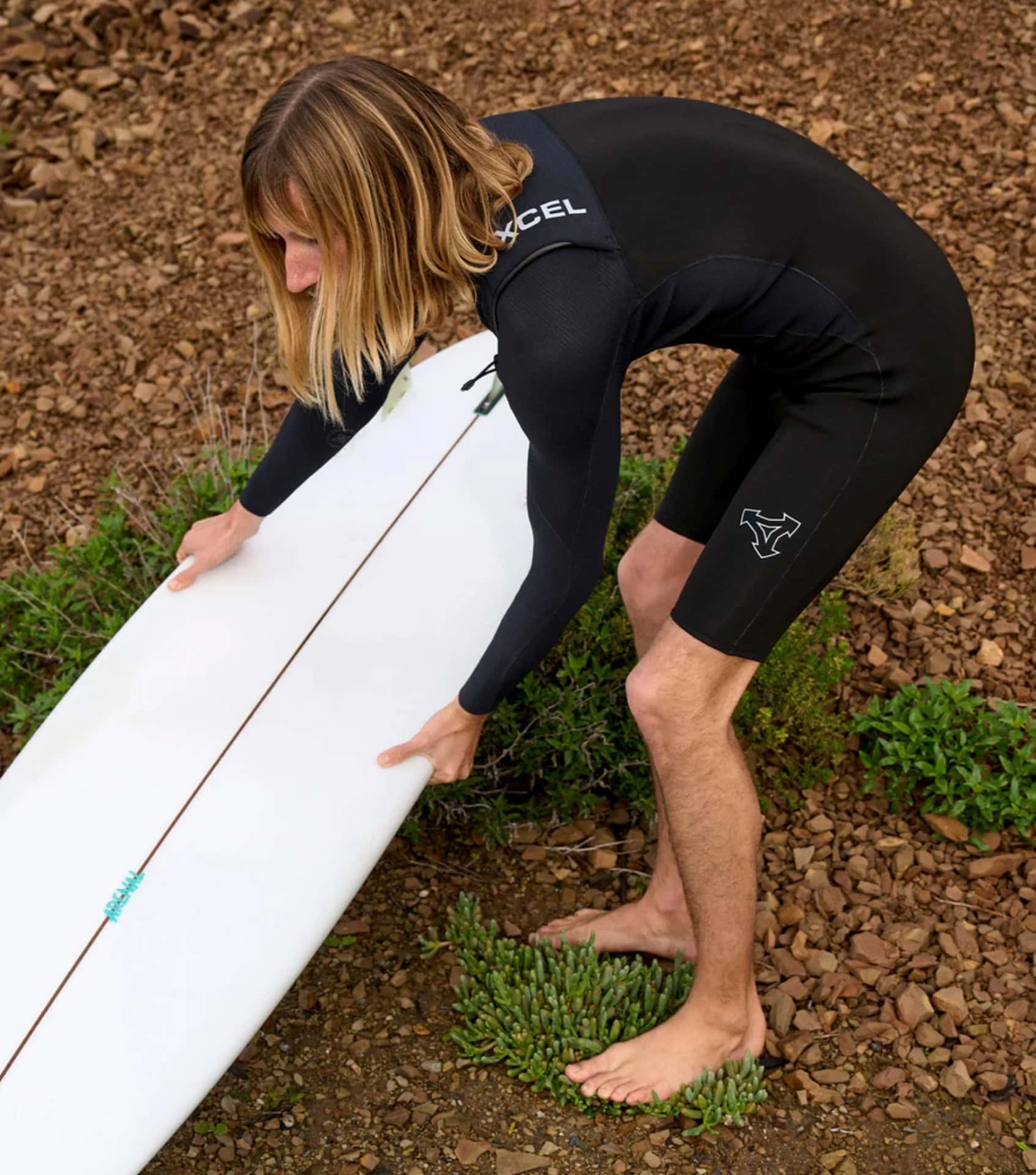
At nearly 50 years old, XCEL prioritizes research and development to producing high-quality wetsuits for men, women, and children. The Drylock X is their warmest suit yet, complete with body heat retaining fibers, Stitch Free Power Seam Technology, and a 100% waterproof zipper system.
XCEL’s Ethical & Sustainability Practices
Materials:
XCEL produces limestone neoprene dive suits, created with dope-dyed yarn, recycled synthetic components, water-based glue, scrap tires, and minimal PAHs.
Supply chain & labor practices:
Each environmentally friendly wetsuit is designed in their factory in Hawaii and undergoes rigorous performance testing. However, we’ll be touching base to learn more about their actual manufacturing and limestone sourcing.
Carbon commitments & green practices:
Each sustainable wetsuit uses 45 plastic bottles, 72% less carbon emissions, and conserves 104L of water. They also recycle neoprene production waste, converting it into qualified materials and minimizing additional landfill waste.
Inclusivity:
XCEL offers men’s wetsuits in sizes XS–3XL and women’s in 4–12.
ROXY
About ROXY
Price Range: $99–$279
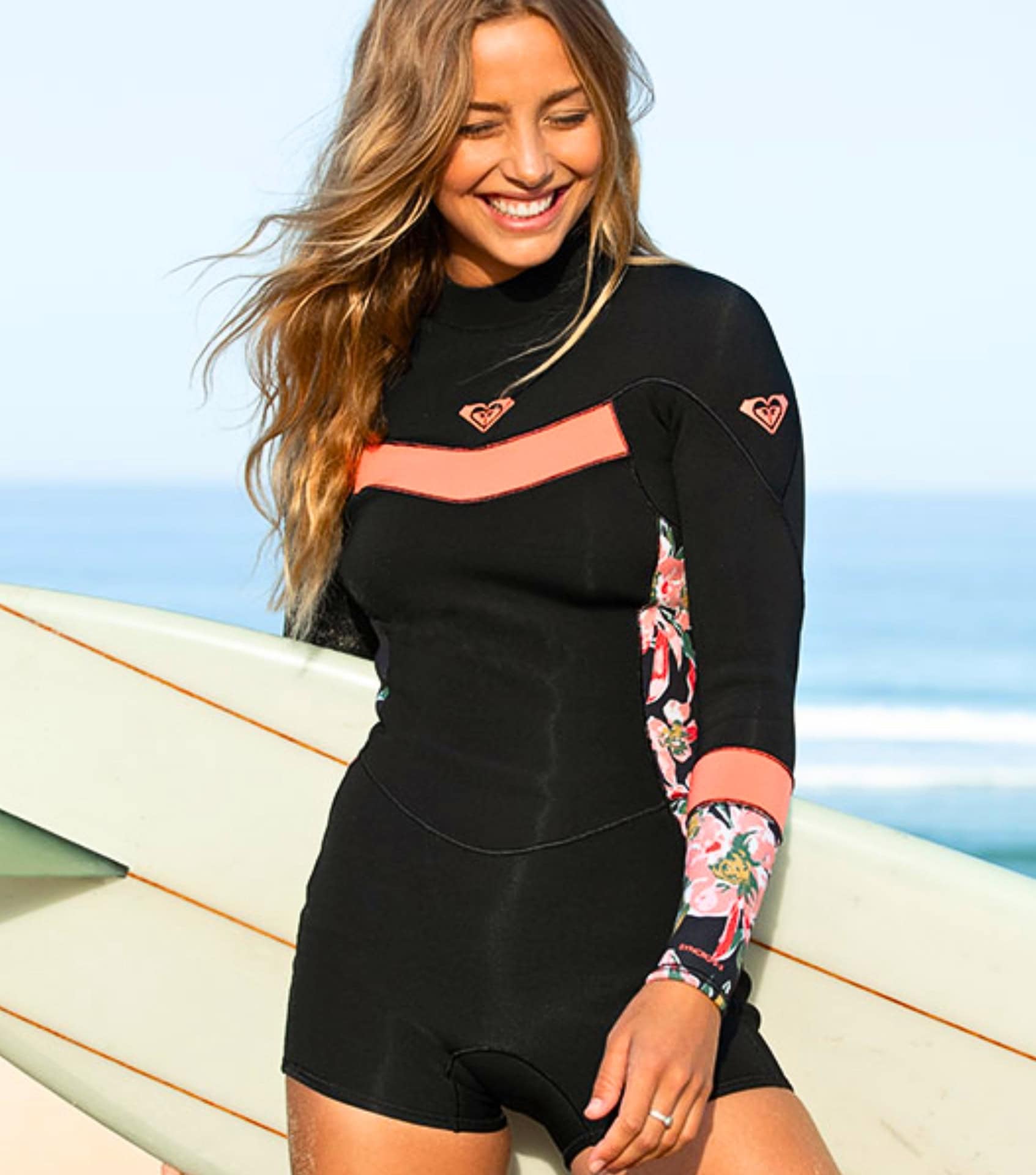
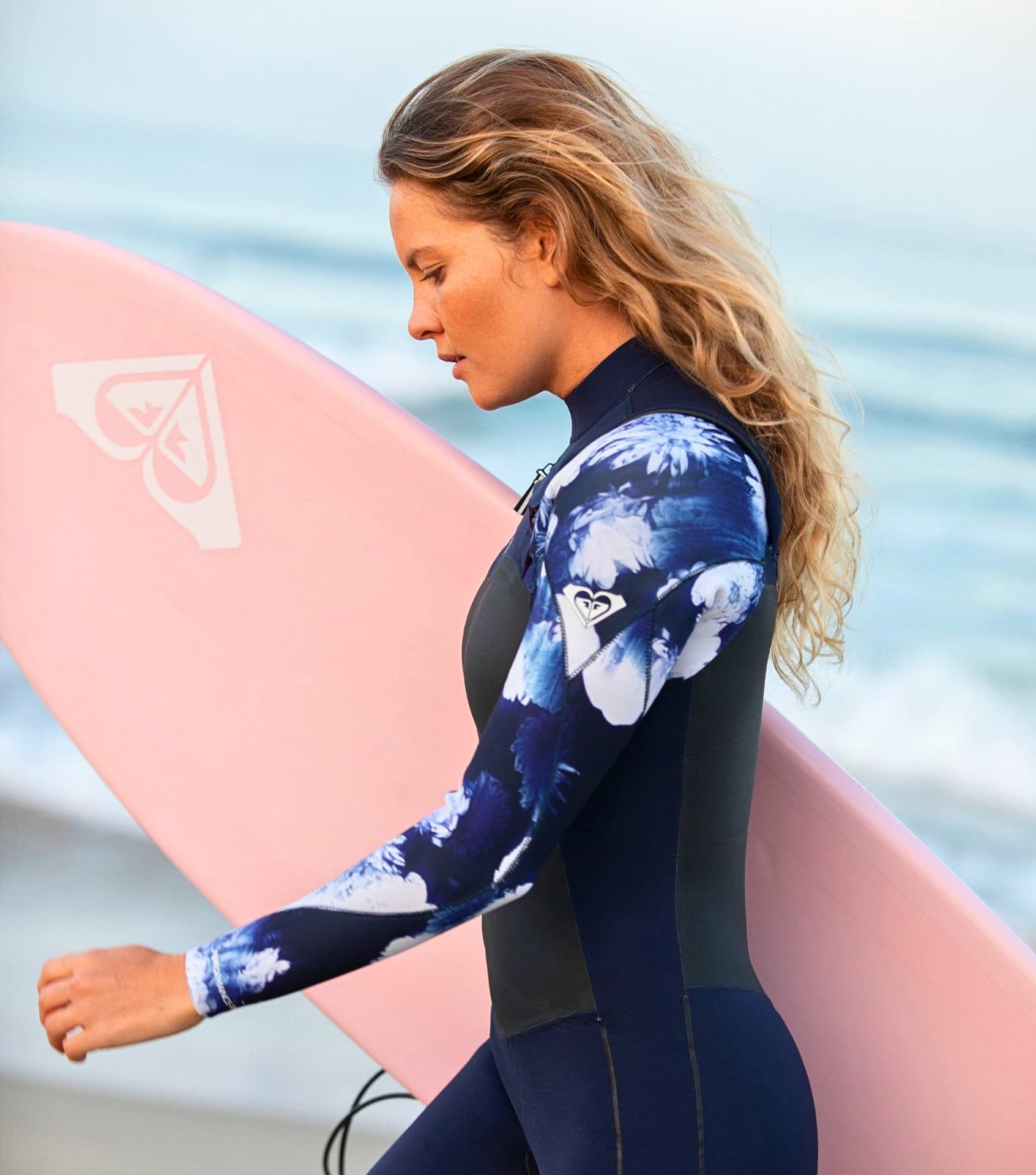
ROXY is an eco-friendly neoprene manufacturer producing high-quality wetsuits for women and girls. The brand produces swimwear, apparel, surf gear, and accessories made from organic, recycled, and sustainable fibers.
Options like the Rise Back-Zip GBS Wetsuit are made from primarily recycled polyester but have a durable, lightweight design, allowing both mobility and longevity.
Roxy’s Ethical & Sustainability Practices
Materials:
ROXY uses a variety of wetsuit materials, including recycled lining made from polyester, water-based glues, StretchFlight Eco neoprene foam, and elastane. Not all of their options are sustainable, but 50% of wetsuits contain at least 51% recycled fibers, like recycled polyester and elastane.
Supply chain & labor practices:
ROXY sources recycled fibers from trusted partners that adhere to its Supplier Code of Conduct, Anti-Corruption Policy, Modern Slavery Act, and the California Supplier Transparency Act. While we’re not sure where their products are made, their partners follow a variety of environmental and animal rights guidelines.
Carbon commitments & green practices:
ROXY plans to integrate various sustainability initiatives in the coming years, including switching to certified recycled, organic, or other responsibly sourced materials.
Inclusivity:
ROXY provides women’s eco wetsuit sizes 2–14.
Community & charitable giving:
Through beach clean-ups, ROXY has removed 800 kg of waste from beaches, increased awareness, and educated more than 300 participants on ocean conservation. ROXY supports several organizations, including Keep A Breast Foundation, Textured Waves, and The Wahine Project.
Quiksilver
About Quiksilver
Price Range: $49–$259
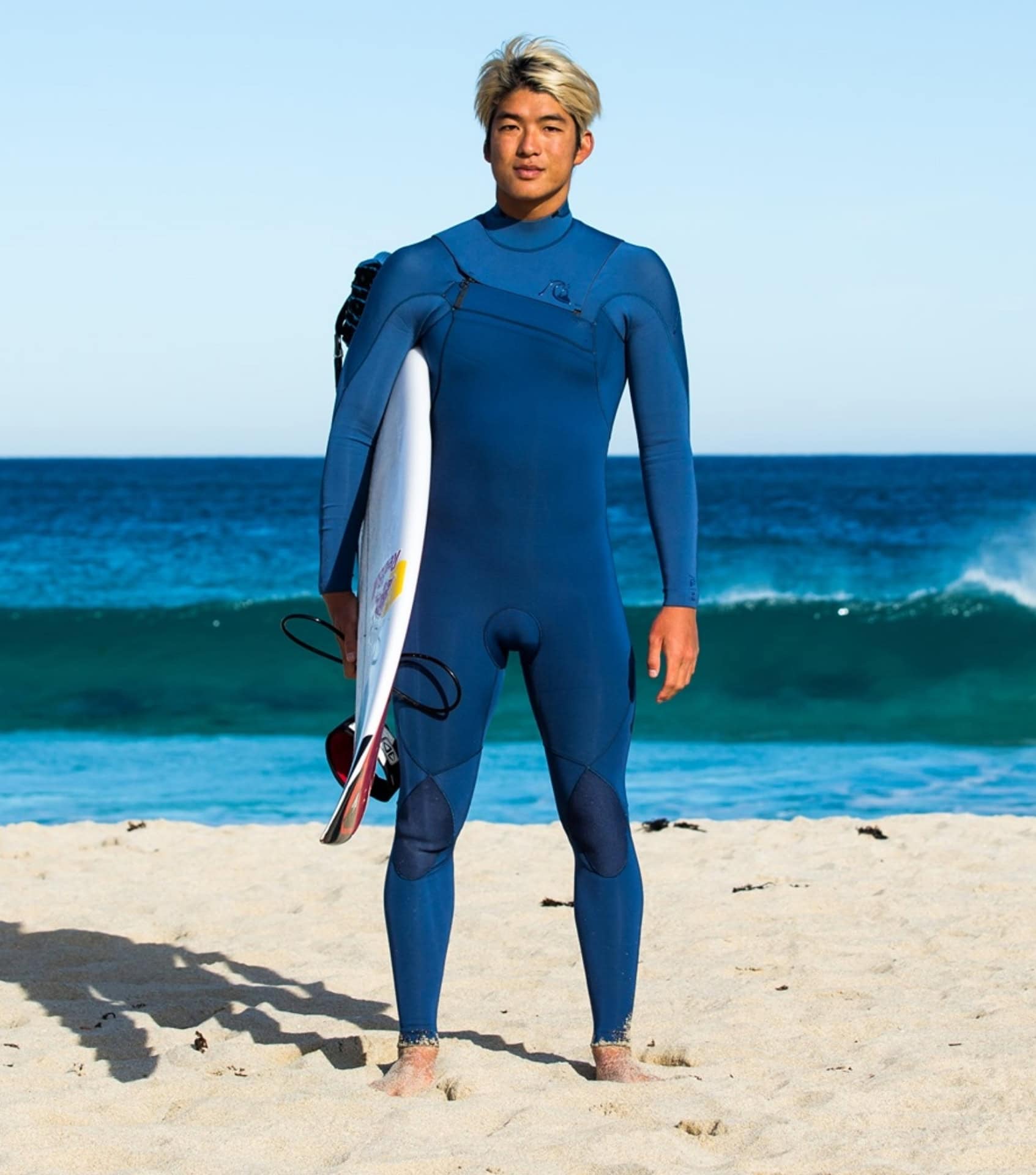
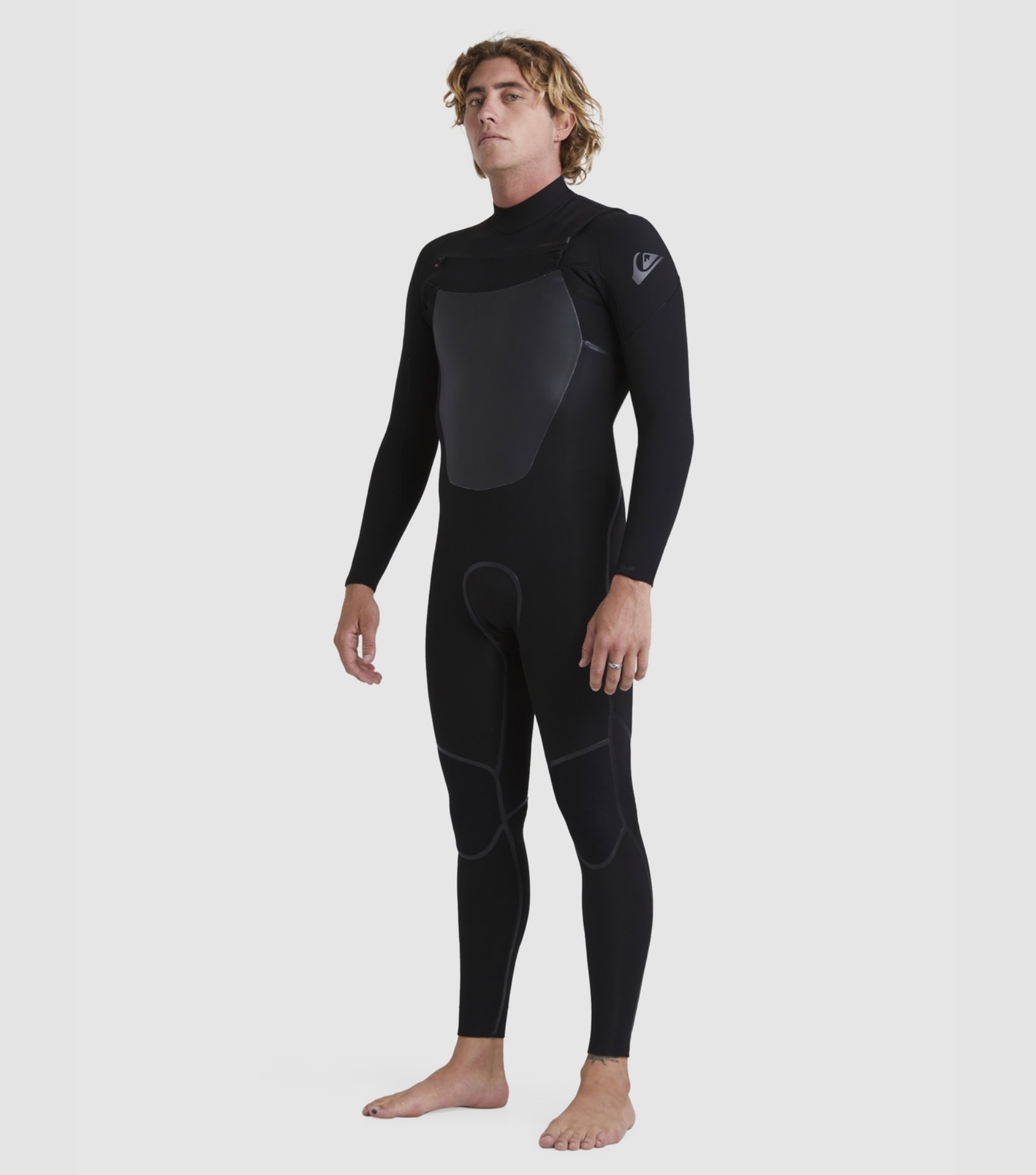
Quiksilver has been around since the late 1960s, producing high-quality swim and surfwear designed for safety, longevity, and sustainability. The Everyday Sessions Back-Zip Wetsuit is both affordable and eco-friendly. It’s made from STRETCHFlight ECO neoprene for insulation and mobility, with added storage options for extra security.
Quiksilver’s Ethical & Sustainability Practices
Materials:
Quicksilver’s eco-friendly wetsuits are crafted from EcoPrene and recycled rubber tires instead of petroleum-based neoprene. They also utilize AQUA GLUE eco-friendly lamination, eliminating the need for toxic solvents.
Supply chain & labor practices:
Over the years, Quicksilver has made advancements in its supply chain, including ISO 14001 certification and plastic-free workspaces. Quicksilver partners with third parties like Repreve to provide full transparency for its recycled fibers.
Carbon commitments & green practices:
Quicksilver has created over 330 million products out of recycled plastic bottles and avoided over 10 million kilograms of CO2 emissions. They have a three-phase plan for improving their sustainability efforts that incorporates community involvement, regeneration efforts, and new products.
Inclusivity:
Recycled wetsuits come in sizes S–XXL.
Community & charitable giving:
Quicksilver has worked with countless organizations for clean water initiatives, like Reef Check and the Surfrider Foundation.